
Playing the Indian Card

Showing posts with label Kingston Ontario. Show all posts

Monday, June 20, 2022

Pollution


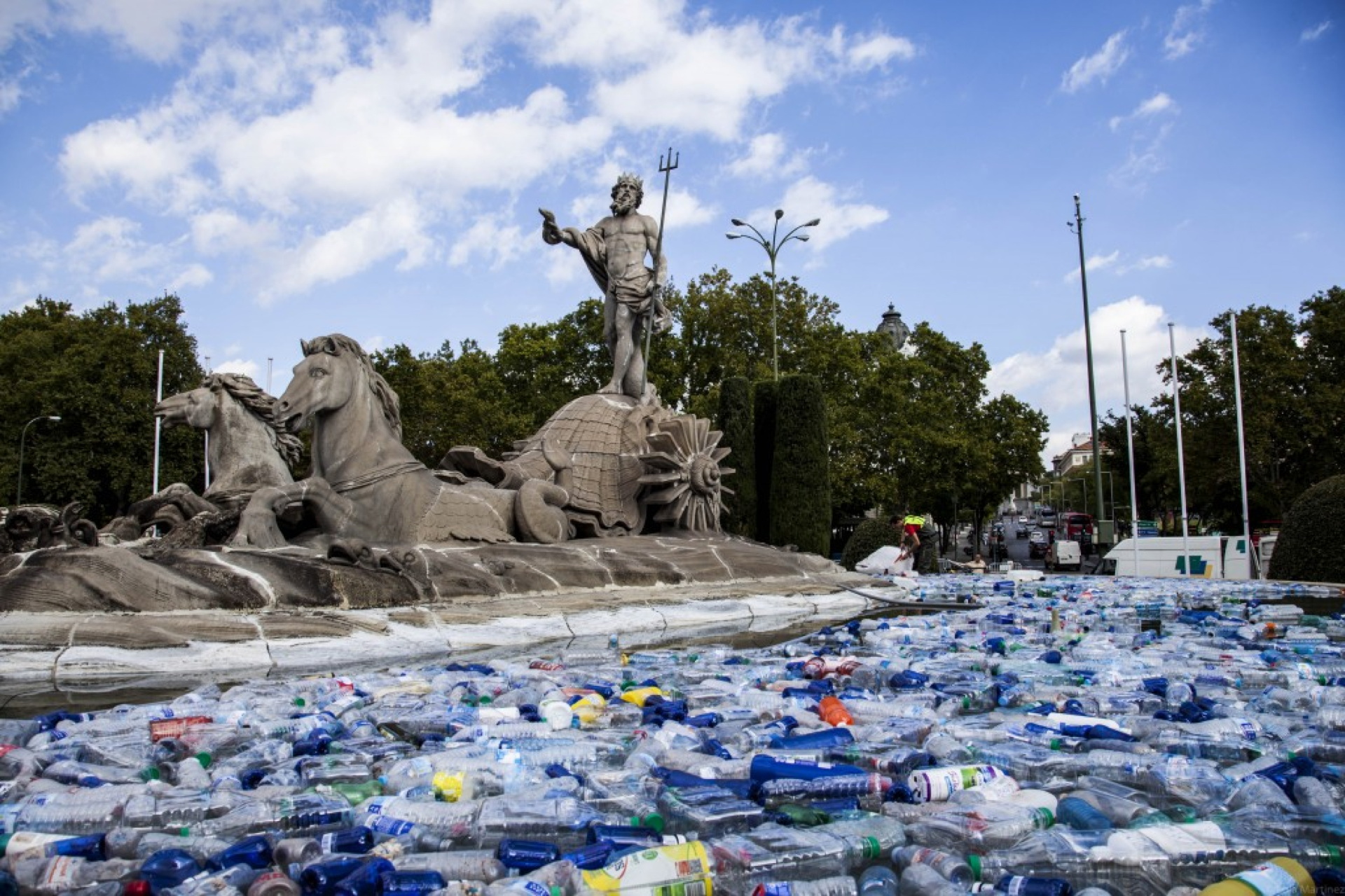
"Plastic Islands," Madrid, Spain


I read in a textbook from which I am teaching that a fountain in Madrid, Spain, has been filled with 60,000 plastic bottles as an art exhibit, “to raise awareness of the environmental impact of disposable plastics.”

A similar idea is behind the civic sculpture “Pollution,” that has graced the Kingston, Ontario waterfront since 1973. It is just two large green concrete cylinders vomiting forth a formless mass.
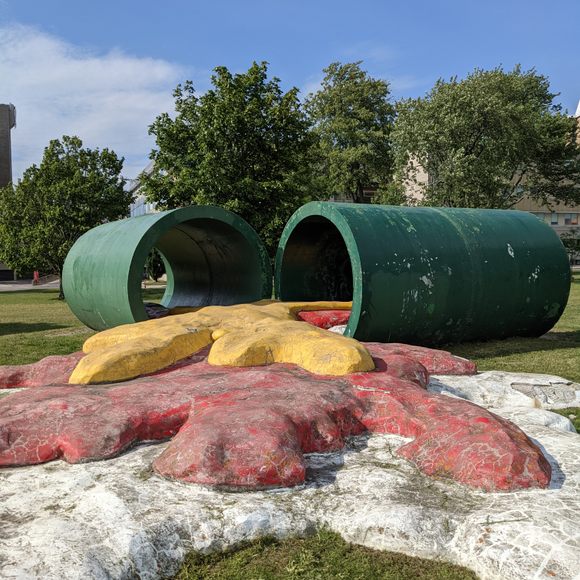
"Pollution," Kingston, Canada

Either illustrates well the decadence of contemporary art.

The point of art is to reveal beauty, one of the three transcendental values, along with truth and good. Without beauty, it has no point, and is not art. It is just stuff. 

“Beauty” here does not mean mere prettiness. That would just be kitsch. Beauty is something more profound and honest than that, including the sublime. Shakespeare’s “MacBeth” is not pretty; Colville’s “Horse and Train” is not pretty. They are troubling. But to just display ugliness, to make the point that it is ugly, is the opposite of art. It is just what it calls itself, visual pollution. If you like art, you must oppose it. And, if you oppose pollution, you also must oppose it.

Neither sculpture serving any possible educational purpose either—not that it is the business of art to educate. Didactic art is tiresome and plodding. It is likely that every single person who has walked by that sculpture on Kingston’s waterfront over the past fifty years already knew that pollution was unsightly. It is pretty much what the word “pollution” means. The sculpture taught them nothing. Most who stroll past the installation in Madrid probably have previously seen empty disposable plastic bottles. There is a good chance they are already against leaving them in public fountains. If they were not, there is no reason to suppose that leaving them in public fountains some more will change their minds.

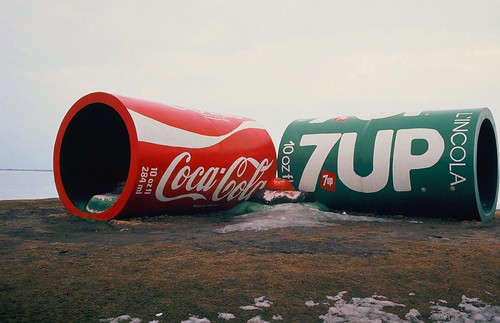
Once, a group of Queen’s students painted the two cylinders of “Pollution” to look like a can of Coke and a can of 7-Up. This was derivative—of Warhol—but a vast improvement. But it counted as “vandalism.”

Angry mobs have demanded the removal of a statue of Sir John A. Macdonald, Canada’s founder, nearby; yet there is not call to remove this eyesore.

Our society has gone mad.

Statue of Sir John A. Macdonald, Kinston, Ontario--since removed.


Sunday, January 13, 2013

Kingston


Kingston, 1875. monsters to the north.

I was born in Kingston General Hospital. I did not grow up there, but I went to university there. My family on my father’s side comes from Kingston, and my father still lives there.

If you do not know Kingston, a lot is in the name itself. It is a small city, only about 150,000, but once upon a time, in 1841, it was named capital of the United Provinces of Canada. It lost that distinction only three years later, but it has never gotten over it. Kingston secretly believes not only that it is the true capital of Canada, but also probably the true capital of the British Empire and Commonwealth, rumours of the demise of which having no doubt been greatly exaggerated. After all, who would really know? Anything that happens outside of Kingston doesn’t really, officially, happen.


Kingston, 1851

Kingston if filled with ghosts. You can hear them, and you can smell them. There are ghosts from the old Rockwood Asylum for the Criminally Insane, on the lakefront to the west. An enlightened place for its day, the inmates were kept subdued not by chains, but by liberal doses of alcohol. There are ghosts from the Kingston Penitentiary, further along the lakefront heading downtown, where all of Canada’s worst murders have been kept, and where many, of course, were hanged by the neck until dead. There are ghosts from Queen’s University, on the lakefront nearer downtown, an extremely exclusive place with the highest student suicide rate in Canada. It is a cliquish place where socializing is a blood sport. Kingston General Hospital, where I was born, is also along the lakeshore, and also full of ghosts. It was there that the Catholic Irish fleeing from the potato famine died in their fever sheds of cholera back in the 1840s.


Window, St. Andrew's Church, Kingston.

But ask anyone living along the lakefront, and they will claim the ghosts are further north. “North of Princess Street,” is, to those living south of Princess Street, a term with some of the connotations associated elsewhere with hell and damnation. Take a step north of that street, and real estate prices suddenly tumble by two thirds. Nobody really knows what’s up there; the maps just say “there be monsters.”

What is wrong with Kingston? What is wrong, in a nutshell, to my mind, is that this is a place where the social order is worshipped as God. Moloch, after all, means "King."

It is a grey, cold place, most itself when it rains.