





 Posts


Monday, May 22, 2017


Sunday, May 21, 2017
Saturday, May 20, 2017
Only Four Days Left
To pre-order a copy of Playing the Indian Card at the special pre-publication price.
Don't miss out!
One donor has just placed an order for ten copies! Many thanks!
Why not get two copies, and send one to your MP?
https://publishizer.com/playing-the-indian-card/

Religion Teaches You to Be Moral

This new study shows the growing cultural divide in Canada. The divide is between the conventionally churchgoing and the secular majority. Their views are dramatically different on several matters.
Most tellingly, there is a clear statistical link between being religiously observant and considering the well-being of others: if you want good people, you want religion. Accordingly, it really ought to be part of the business of government to encourage religion. It is harmful to the common good to elevate atheism and secularism to some sort of religious parity or supremacy. Government ought to be “Defender of the Faith”; just not any one particular faith.
The survey also shows Canada has its own version of a selfish “bi-coastal elite.” The residents of Saskatchewan, Canada’s geographical heartland, are the best, most compassionate Canadians, and Quebeckers are the most selfish, followed by BC and Alberta.
It is interesting and surprising that Ontarians fare rather well. I think that's the small-town influence. I have long thought that even Ontario's biggest cities tend to be small towns at heart. Canada’s legendary “niceness” is an artifact of this peculiar Ontario small-town culture. It is one of our best features.
Unfortunately, again illustrating the cultural divide, the story and even its headline are half hogwash. It arbitrarily declares left-wing political positions more “compassionate.” Only on those spurious grounds does it find "that compassion has its limits."
It notes, for example, as a lack of compassion, that the religious are less inclined to say we need more social acceptance than we have of homosexuality.
“There should not be greater social acceptance of people who are LGBTQ (lesbian, gay, bisexual, transgender, queer);”
Consider, if you will, the improbable possibility that homosexual behaviour actually leads to a greater risk of illness. Because, in fact, it does. Is it compassionate to go beyond quiet acceptance, as we have, to aggressive promotion, as we have? Consider the improbable possibility that homosexual and “transgender” behaviour leads statistically to devastating unhappiness, and a high likelihood of future suicide. Because, in fact, it does. How compassionate is it, then, to promote it? Suppose you also believe that is is sinful, as all the world’s major religions and moral codes have taught for millennia, so that indulging in it risks an eternity of suffering? How compassionate is it then to promote it?
The religious, the study notes, want Canada to accept fewer immigrants.
“Canada should accept fewer immigrants and refugees”
Note here an obvious fudge. The Post is making no distinction between immigrants and refugees; the difference is huge in moral terms. Legitimate refugees are indeed a moral issue. Regular immigrants are not. Opposing more immigration may be a concern that new immigrants in too great numbers can damage the social fabric—to everyone’s detriment, including the new immigrants. They might also, after all, not share your deep moral concerns. If you have fewer morals, you worry less about this. Worrying more about it comes with having stronger morals.
"They would be uncomfortable if a child planned to marry someone from a different cultural or religious background"
This confirms that the concern among the religious about immigration has nothing to do with lack of compassion, and is about protecting morals and social order. Sharing the same religious background within the family is essential, if religion is the centrepiece of your life. It hs nothing to do with lack of compassion towards members of the other religion.
Note again a sneaky fudge: the Post is not distinguishing between culture and religion. These are different issues.
"Preserving life is more important than people’s freedom to choose on issues like abortion and doctor-assisted death."
More fine fudge. What the Post means, absent the euphemism, is that preserving life is more important to the religious than is allowing unrestricted abortion and euthanasia. I’m sure this must come as a shock to many. Either abortion or euthanasia are in fact, contrary to this phrasing, radical restrictions on the freedom to choose. The subject of either abortion or euthanasia loses their freedom to choose anything at all, ever again, from that moment on. Preserving life is also preserving the freedom to choose.
Is it kind to encourage people to kill themselves? I think that is debatable. Is it kind to encourage people to kill others? I think there can be no debate.
Kindness, compassion, and concern for others would seem to be entirely on the one side.
The National Post would seem to be on the other.
Friday, May 19, 2017
Passing Strange
For some time, the highest number of hits on this blog have come from ... Russia!
More than twice as many as the next largest participant, the USA. Odd, it seems, for a blog that often focuses on Canadian content.
But Canada currently comes in only seventh, behind France (#3), China (#4), Germany (#5), and the Philippines (#6).
Just shows how smart Russians are, I guess....
Welcome, Russian readers!
Appropriate Appropriation
 |
| Newly-elected Micmac leader appearing in "traditional dress," 1971. |
It is getting crazy back in Canada. A third prominent editor has lost his job for dissenting on the issue of “cultural appropriation.” That’s Steve Ladurantaye, editor of The National on CBC; following Jonathan Kay of The Walrus, and Hal Niedzviecki of the Writers’ Union.
 |
| Actual Micmac traditional dress, 1860s. |
Most disturbing is how all three needed to publicly apologize for their opinions, before being fired or resigning anyway. It is all like the public confessions under Stalin, like the Maoist purges, or like Ingsoc in 1984. You had to die; but only once you had fully admitted your thought crimes and professed your love for Big Brother. Ladurantaye will even apparently have to undergo reeducation sessions.
Yet—and perhaps this was the true nature of their crime—the point made in Niedzviecki’s original editorial was just about self-evidently true, if anyone read it.
He pointed out that without cultural appropriation, it would be first and foremost “indigenous” authors who would be unable to write. They, more than any of us, are trying to understand and offer insights into a culture not their own.
 |
| Iroquois appearing at exhibition in Buffalo in 1914, with traditional feathered headdress and traditional teepees. |
To begin with, they are writing in English about a culture the language of which was not English. In doing this, they are showing one culture through the prism of another. And the prism into which they are appropriating is Canadian English-language culture, not some aboriginal one. I think it can also be taken almost for granted that their own first language is English, not Ojibwe or Cree. They are writing novels about a culture that new nothing of the novel, a European invention. They are writing about a culture that had no writing.
Because it had no writing, we know little or nothing about it. We or they. Their guess is about as good as yours or mine as to what it was, really. They are, fundamentally, modern Canadians like the rest of us. They have watched the same TV shows, seen the same movies, played the same video games. If they write of a separate Canadian aboriginal culture, they are making it up as they go along, not reporting of something that has been. Any of us could do that equally well, so far as our cultural context goes.
 |
| Joseph Brant in traditional Mohawk dress, 1820s. |
No cultural appropriation, no First Nations literature.
Choose one; you can’t have both.
Niedzviecki’s other point was that cultural appropriation is a good thing. Heck, it what fiction is in the first place: writing about experiences that have not actually happened to you. Accordingly, any objection to cultural appropriation is an objection to fiction writing itself.
 |
| Traditional Iroquois longhouse. Someone is making things up. |
And so any prize for literature--the Nobel Prize, lets say—is always a prize for cultural appropriation. While the usual advice to “write what you know” is sensible—when you do not, you run the risk of looking foolish to someone who knows the subject matter better than you—conversely, the ability to write convincingly about a person remote from your own experience is the mark of a truly fine writer.
Let’s consider a few examples:
Shakespeare almost always set his plays in a foreign locale; most often Italy. This was a natural draw for audiences, then as now: we want to see something new, something exotic. We want cultural appropriation, and without it books are boring. Other than Italy, Shakespeare wrote of Scotland, Denmark, Moors, Jews, ancient Romans, ancient Greeks, ancient Egyptians; and did a brilliant job of always understanding them from the inside. That was his greatness.
John Milton, devout Puritan, famously managed to get under the skin of the Devil himself, and see the creation from his point of view, in Paradise Lost. An imaginative tour de force.
Jonathan Swift wrote of foreign lands in Gulliver’s Travels, including Japan and Formosa, barely known at the time. Sinbad in the Arabian Nights, Homer in the Odyssey, Apollonius in the Argonautica, Valmiki in the Ramayana, the Chinese classic Journey to the West, and a million other exotic tales have done the same. Starting with the Epic of Gilgamesh, the first known work of literature in the world.
Culture is cultural appropriation.
There is Byron’s epic, Don Juan. Byron could be accused of ignorance of the Spanish culture he appropriates: he rhymes “Don Juan” as if it were an English word. Yet it is still considered, rightly, his great work. And do you suppose Coleridge had really been to Xanadu, and met with Kubla Khan? And what of FitzGerald’s Rubaiyat of Omar Khayyam?
Opera could not exist without “cultural appropriation." Aida? The Mikado? Disney’s animated fantasies follow the same formula: each an insight into the aesthetic of a different culture.
Ernest Hemingway’s The Old Man and the Sea was another scandalous piece of cultural appropriation, which probably won him the Nobel Prize. John Steinbeck’s The Pearl, seeing life through the eyes of Mexican peasants, was made into a celebrated Spanish-language film in Mexico. Pearl S. Buck won the Nobel for The Good Earth, life through the eyes of Chinese peasants.
English-speakers can see themselves reflected in the writings of Joseph Conrad, a Pole, Vladimir Nabokov, a Russian, or in Jules Verne’s Around the World in Eighty Days. Did either ever strike any of us as illegitimate on those grounds? Was it wrong of Samuel Beckett to write in French? Western Europeans see themselves interpreted by the Japanese in Miyazaki’s Howl’s Moving Castle. Where was the uproar? Canadians have been appropriated in Proulx’s The Shipping News. I saw no protest.
And then there is the genre of historical novels. All illegitimate, then?
The aboriginal writers might have cause to be upset, perhaps, if portrayals of native people in Canadian or world literature were insensitive or prejudicial. The issue would not be cultural appropriation, but there would be an issue of prejudice. This is not the case. Thanks to the noble savage archetype, images of the First Nations in our shared literature have almost always been highly flattering.
No, cultural appropriation is a problem for about the opposite reason. The problem is that “Indian culture” as it exists today is really not much different from mainstream culture. Mostly just the experience of poverty and welfare. This is why the difference must be exaggerated. It must be artificially maintained that nobody can understand or write about it who has not lived it.
But the proof of that is simple: do they? And have they, successfully? Which is to say, do people buy and want to read the books? If they could not, convincingly, there would be no need to protest “cultural appropriation.” To protest cultural appropriation is to admit that they can. Indianness is a profitable field to farm, literarily, it is a current and popular subject, and has always been popular with readers, and so, out of greed, some writers want to put a fence around it.
But we should not allow that. Not just because it is destructive of fiction as a form. Not just because it is destructive of culture. We should foremost because it is objectively immoral. We are all brothers, and ought to seek to understand each other. This fuss about “cultural appropriation”artificially emphasizes our differences.
Wednesday, May 17, 2017
Time Is Running Out
... to reserve your own pre-publication copy of my new book, Playing the Indian Card.
You will be amazed to find what you did not know about Canada's "First Nations."
And horrified to discover how insane our "Indian policy" has been!
Hurry on over to https://publishizer.com/playing-the-indian-card/
You can reserve with PayPal or any major credit card.
Only one week left!

Pure Laine Irlandais
 |
| Quebec in 1755, pre-conquest |
In 1534, Jacques Cartier, an experienced Breton pilot from St. Malo, sailed across the North Atlantic and claimed Canada for France.
Cartier needed no Medieval model for inspiration: expeditions under Cabot and Verrazano had recently returned with certain news that there was land beyond the Western Sea. Cartier had himself already sailed to Newfoundland.
Still, it is interesting to notice just who St. Malo was.
Malo was the chief disciple of St. Brendan.
And, yes, he accompanied Brendan on his voyage.
Cartier must have grown up with the legend. It was a sort of divine charter for all the seamen of St. Malo.
When he came to the New World, Cartier described its bounteousness in words also reminiscent of Brendan. Of the Northumberland Strait, Cartier writes, “The grounds … are very fair, and all full of peason, white and red gooseberries, strawberries, blackberries, and wild corn, even like unto rye, which seemed to have been sowed and plowed. This country is of better temperature than any other that can be seen, and very hot.” (Hakluyt, loc. 65). In the Gulf of St. Lawrence, he sees “great store of vines, all as full of grapes as could be, so that if any of our fellows went on shore, they came home laden with them.” (loc. 146). Of the Gaspé, he comments, “This country is hotter than the country of Spain” (loc. 75).
Such is Eastern Canada in the summer, if you stay only for the summer. But note, this justifies Brendan's account of the bounty of the “Land Promised to the Saints.” It need not be understood as fanciful, for we know Cartier's account was factual.
One also begins to understand, from Cartier's logs, why the Medieval Irish might have remembered the Canadian East Coast, as in the Voyage of Bran or the Voyage of Mael Duin, as “The Land of Women.” When Cartier's men first encounter natives in the Gaspe, their reception is very different from that received by the Vikings at the hands of the Skraelings (presumably Beothuks) further north. The women, Cartier recounts, “came very friendly to us, rubbing our arms with their own hands.” (loc. 74). This intimate form of greeting is repeated almost everywhere they go. In Hochelaga (Montreal), “all the women and maidens of the town gathered themselves together … and as many as could came to rub our faces, our arms, and what part of the body soever they could touch, weeping for very joy that they saw us, shewing us the best countenance that possibly they could” (loc. 161).
And first impressions, it seems, in this case did not lie. Among the Indians, Cartier reports, “Everyone weddeth 2 or 3 wives.”
But we are getting ahead of ourselves: before marriage, young maidens are kept in a “common place,” “as harlots free for every man that will have to do with them, until such time as they find a match.” “Very wantonly they sport about,” Cartier continues, trying to sound disapproving, “shewing whatsoever God hath sent them” (loc. 176-7).
At least twice, Cartier is offered young girls as gifts (loc. 135, 145).
Champlain, many year later, encounters a similar greeting among the Hurons. “[A]s I went out of the cabin to escape the fleas [mosquitoes], of which there were large numbers and by which we were tormented, a girl of little modesty came boldly to me and offered to keep me company” (Champlain, Voyages, p. 283).
It must have been very trying for the Irish monks. And for Bran’s sailors before them.
On his third expedition, Cartier's men sent back two ships loaded to the water line with diamonds and gold. It was once again just as St. Brendan had claimed: there were precious stones lying everywhere, for the picking.

 |
| Canadian gold and Canadian diamonds |
Sadly, the bounty, enough to make everyone in Brittany rich, turned out, on inspection back in Europe, to be quartz and iron pyrite. This caused a common idiom to enter the French language: “faux comme les diamants du Canada.” “As phony as Canadian diamonds.”
But it does seem to justify one more detail of the Brendan account. Quartz outcroppings and iron pyrite are everywhere on the Canadian Shield. In claiming there were riches there for the taking, Brendan and his shipmates might have simply made the same mistake.
There are other hints, in early French chronicles, that Christians had been here before. In 1604, landing in Minas Basin, three or four leagues north of Cape Split, Nova Scotia, Champlain, eerily, finds a wooden cross, so old that it is covered with moss, and the wood mostly rotted (Champlain, p. 113). According to conventional history, there should have been no Europeans there before this time.
Might the local Indians have been influenced to do this by the Irish long ago? In 1675, when Récollet Father Chretien Le Clercq was sent to the Indians of northern New Brunswick and the Gaspé, he was surprised to discover that they already venerated the cross. The custom was so prominent that he called these Indians “Cross-Bearers.” “They bear it figured upon their clothes,” he writes, “and upon their skin, they hold it in their hands when travelling..., and place it at both ends of their houses as a mark of honour...” Le Clercq's own conclusion is that “this people have formerly received a knowledge of the cross, evangelism, and Christianity, which was lost by the negligence of their ancestors.” He also thought they showed some prior knowledge of writing.
 |
| Sketch of LeClercq by LeClercq |
The Indians themselves told him the cross came originally from a man who arrived from across the sea and settled among them, healing many (Mulloy, p. 141-2).
The cross is a simple enough image; it could easily have emerged here in Eastern Canada independently, with no Christian connection. Most modern anthropologists are not impressed by Le Clercq's evidence, and assume just that. But Le Clercq's reporting is generally extremely accurate; at a minimum, he is not making this up. And the location seems about right for influence by Great Ireland. According to the Norse, the Irish lands were south and west of Newfoundland.
Whatever the truth of the time before Cartier's arrival, however, there were certainly more Irish coming now--with the French. There were Irish in Brittany; it is possible the name “Cartier” itself is a version of the Irish “Carty” or “Carthy,” as in “McCarthy.” We know that there were Irish in early Quebec, in Acadia, and in Louisbourg. Their presence has been established through Irish names, or notations such as “Irlandais,” on settler lists. By this method, we can estimate that about 5% of habitants in New France were originally Irish: 130 out of 2,500 families in the 1700 count. But sadly, we know almost nothing about them except their names. They were simple, common people, and few records were kept regarding the common people in those times.
We are left to speculate; and so that is what we will do.
Cartier's sixteenth-century settlement failed. It was the Sieur de Champlain, early next century, who actually founded New France. In Ireland, this was just after the Nine Years' War. It was a time when many Irish were fleeing to the continent to escape the conquering English. It was also the beginning of the Ulster Plantation, in which many thousands of Irish were left landless and without a living. In those times, before America was America, France was the nearest refuge; and, in particular, the provinces of Brittany and Normandy, nearest to Ireland, from which most of the settlers for New France came.
And so, with the first French settlers no doubt came some Irish—the more so since these Irish were likely to be in dire economic straits and in need of land. Most came as farmers; some apparently came as stonemasons for the building of Fort Louisbourg. There were also Franco-Irish colonies on the southwest shore of Newfoundland by the middle of the 18th century, settled from St. Malo (“'Une Grande Liaison': French Fishermen from the Ile Royale on the Coast of Southwestern Newfoundland, 1714-1766 – A Preliminary Survey,” Newfoundland Studies III: 2, Fall, 1987).
Sadly, the history of Ireland did not end there. The Irish rose again against the English in 1641, the Confederation War, and battle raged for ten years before Oliver Cromwell crushed the Catholic Irish. In victory, Cromwell decided to clear Ireland east of the Shannon: the Irish were to be sent “to Connaught or to Hell.” To be Irish east of the Shannon became the crime of high treason.
So what to do with all these excess Irish? Connaught was already overcrowded, and Hell would not have them. One clever strategy employed was to take them alive, and ship them to the New World as slaves. After all, as the English state papers put it coldly in 1742, this was “a great benefit to the West India sugar planters, who desired men and boys for their bondsmen, and the women and Irish girls … To solace them.”
I use the term “slaves” here controversially. You might have heard of this huge wave of Irish settlement in the New World as “indentured servitude.” It was not that. According to the 1927 International Convention on the Abolition of Slavery, who ought to know, “slavery is the status or condition of a person over whom any or all of the powers attaching to the right of ownership are exercised.” Indentured servitude, by contrast, is a contract, involving specified rights and duties for both parties.
These were slaves.
Firstly, they were transported without consent on their part.
Secondly, in the New World, they were bought and sold as property.
Thirdly, there were no legal limits on what their masters could do with them, up to and including killing them (Akamatsu, p. 105).
The one distinction between them and the black African slaves who followed was that the Africans were enslaved for life, while the Irish usually had to be released after a set term, of from seven to twenty years.
This was not always to their advantage. Since, at a known future date, all ownership rights were lost, slave owners had no incentive to keep them alive past that date. You might as well work them to death. As one overseer explained, “Oh, the niggers are worth too much to be risked here; if the Paddies are knocked overboard or get their backs broke, nobody loses anything” (Rhetta Akamatsu, The Irish Slaves, p. 10).
Children born during this period of slavery were also automatically slaves, and their term did not end when their parent's did (I use “parent's” in the singular advisedly. Think about it.).
This Irish slave trade actually began in the days of Elizabeth—just as soon as England had New World as well as Irish colonies. But it received a huge assist from the events of the 1640s and 1650s. During the Nine Years' War, 300,000 Irish were transported, mostly able-bodied men from the losing side. This was estimated by Sir William Petty to be one in six of all Irish adult males at the time (Rhetta Akamatsu, The Irish Slaves, p. 3). During the 1650s, under Cromwell's ethnic cleansing campaign, over 180,000 were transported, most of them below the age of 14.
The system was simple: the Irish were thrown off their lands. Then anyone found vagrant was transported. In 1655, the entire town of Lackagh was sent into slavery, including two priests (Akamatsu, p. 19).
On the voyage across, records suggest, about 37% died, sometimes chained by the neck and legs (Akamatsu, p. 10). This is rather worse than the mortality rate among black Africans in the later “Middle Passage”: 25%. But then, African slaves were worth more than the Irish: up to 50 pounds, versus 5 pounds. They were worth taking better care of. as cargo, or as possessions. The governor of Virginia in 1671 estimated that four in five of the “indentured servants” who did make it across died before their term of service expired (Akamatsu, p. 98).
Up until 1660, there were more Irish slaves than free citizens in America. Up until 1700, there were more Irish slaves than black slaves in America. This Irish slave trade subsided over time, but it continued, in a small way, right up to the end of the 18th century; thousands were transported in the wake of the United Irishmen Uprising in 1798.
Most Irish ended up in the sugar plantations of the West Indies, where slave labour was in greatest demand. But many were sent to Virginia, and some as far north as New England.
Now, for an Irish slave in New England or New York, in which direction did freedom lie?
 |
| Extent of New France (French claim) |
In the South, one might head for the mountains; or join an Indian tribe. But in the Mid-Atlantic and Northern States, the best opportunity lay North. Irish slaves who could escape their masters and make it to the French colonies were free. And better than that: they were in a place where their religion, if Catholics, was not only legal, but celebrated, and among people who like themselves had no special love for the English.
A Western paradise indeed.
An estimated ten percent of “indentured servants” in Pennsylvania managed to escape their bondage (Akamatsu, p. 60). They had one advantage here over black slaves: it was easier for them to blend in when on the run. We frankly have no good evidence of it, but one can imagine, if not assume, that an informal early Underground Railroad to New France ran at this time. We know at least of some Irish women bound for slavery in Virginia who were intercepted at sea by the French warships Le Brilliant and L'Heureux, and released to freedom in Quebec (O'Gallagher). The captain of L'Hereux was an Irishman named Darragh (www.pbalkcom.com).
In the 1680's the Williamite Wars commenced: between James II, the Stuart king of England, a closet Catholic, and William of Orange, a Protestant claimant supported by Parliament in London. Catholic Ireland rose in support of James, and the bloody part of the fight took place mostly there.
When the outnumbered Catholics lost, they made terms by which the Irish soldiery could choose whether to enter service for England, or for their French allies. The two royal standards were placed in a field, and units marched out of besieged Limerick towards the one, or towards the other.
By a margin of ten to one, the Irish chose France and exile. Twenty-five thousand officers and men left for France and never returned.
 |
| Wild Geese flying to Canada |
These were the original “Wild Geese.”
They began a tradition: as things grew grim in Ireland, generation after generation, young men of all classes would take ship for France and for other Continental powers, to serve in their foreign legions.
For a time, this suited everyone. The Irish, especially the Irish upper class, preserved their martial traditions—and in any case, needed some way to make a living, unable to own land or practice a profession at home. The French liked to see themselves as the leader of the Catholic world, the King of France styling himself as “His Most Christian Majesty.” So they welcomed fellow Catholics under their royal parasol. In any case, they were in the habit of employing up to 20% foreigners in their military. And the English saw no problem with this. After all, each Irishman who voluntarily exiled himself to fight for France was one less Irishman they had to worry about in Ireland. The English did not want or even permit Catholics in their army, for they feared Catholics with guns.
We have records of a good two dozen French army regiments over the years with Irish names. These would have been commanded by Irish officers; but apparently, ordinary Irish foot soldiers could and did also serve in other French regiments.
 |
| St, Marguerite d'Youville, foundress of the Grey Nuns |
Some of them must have served in New France. And some of soldiers, on ending their term of service, must have settled there. McCarty is one Quebec name traceable to the Wild Geese: Charles Latouche McCarty (or McCarthy) emigrated from France in 1737 (Wilson, “The Irish in Canada,” 1989; Marianna O'Gallagher, “The Irish in Quebec”). He fought with the Irish regiments in the War of the Austrian Succession and the Seven Years' War. Marguerite d'Youville's stepfather, Timothy O'Sullivan dit Sylvain, born in Cork, had served sixteen years as Captain of Dragoons in the Irish Brigade (http://www.pbalkcom.com/valcartier/Research%20Guides/The%20Early%20Irish%20in%20Quebec.htm). His daughter went on to found the Grey Nuns, and to become a saint of the Catholic Church.
The presence of Irish soldiery in America would have been especially likely at times of conflict with England. It is not just that more soldiers of any sort would be there at such a time. According to O'Callaghan's History of the Irish Brigades, Irish regiments within the French Army claimed a traditional right to be first to battle whenever the English, their enemies, were in the field (p. 616). This also suited the French.
In the second half of the eighteenth century, England again began to allow the Catholic Irish to enlist in her armies. After this, the two, Irish Catholics fighting for England, and Irish Catholics fighting for France, would occasionally come face to face in battle. Lucky for the French. When this happened, the French found, the Irish tended to defect to them en masse (O'Callaghan, p. 628).
In Montreal, in 1757, Vaudreuil formed a separate New World Irish company out of such deserters (O'Gallagher).
There were therefore no doubt Irish fighting for France in the Seven Years' War, the war in which Wolfe won Quebec on the Plains of Abraham. Unfortunately, however, the records of the French War office for this period are missing (www.pbalkcom.com). Revolutions and their resultant disorder are such inconvenient things. The Regiment de Berwick, part of the Irish Brigade, under FitzJames, apparently served (Peter Mackenzie, “French Military Units in North America,” http://peter.mackenzie.org/history/hist52.htm).
 |
| Standard of the Berwick Regiment, an Irish regiment of the French Royal army. |
In 1755, a unit arrived at Quebec, usually said to be part of the Bearn Regiment; that is, a regular French company based in the province of Bearn, in the Pyrenees bordering the Basque country.
And it may indeed have been the Bearn Regiment that marched off the boats in Quebec.
But, mysteriously, the same regiment is later seen below the ramparts of Fort Oswego wearing the traditional red and green uniform of an Irish brigade. Moreover, a French deserter identifies it to the English as an Irish unit (Edmund Bailey O'Callaghan, “Papers Relating to the First Settlement and Capture of Fort Oswego, 1727-1756”). When the regiment's fallen officers are listed in official documents after the siege of Fort Carillon, the names indeed seem rather Irish: Macarti (McCarthy), de Patrice (FitzPatrick), Duglas (Douglas), de Moran (Moran), Paure (Power), de Coni (Cooney).
Their subsequent history also sounds like the behaviour we would expect from an Irish unit, given its right to be first at the fight when the English were in the field. In 1756 they defeated and burned out the British at Fort Oswego. They captured Fort William Henry in 1758. They fought in the epic defense of Fort Carillon the same year. In 1759, they were back at Quebec to win in the Battle of Beauport. They fought on Plains of Abraham, then retreated to Montreal. They charged with fixed bayonets at the Battle of Sainte-Foy. They seem to have been first in line wherever the British appeared.
Why might an Irish regiment be confused with the Bernaise? It may be due to the lost records—the Bearn identity may simply be mistaken. Or there may be another reason. Although for many years the English saw no problem with the Irish serving in foreign armies, they were a bit put out to face a troop of well-drilled Irish cavalry lined up with Bonnie Prince Charlie at the Battle of Culloden in 1746. They soon thereafter made it illegal for the Irish to serve in foreign armies. Those who did became officially guilty of treason under English law.
Accordingly, the French had some reason to protect the true identity of their Irish soldiery, and indeed to hide the details of their Irish recruitment networks. This may also be why the French pressed, on their surrender at the end of the French and Indian (Seven Years’) War, for a clause expressly pardoning anyone who had “left the service of their sovereign,” or “carried arms in North America” (www.pbalkcom.com).
This was hardly necessary for French soldiers.
Nor was it needed for Vaudreuil's Irish deserters, who had already been shipped off to the European front.
There must have been others.
 |
| Shared banner of the French Irish brigades |
The French were unable to get the English to accept this clause. To the latter, priorities were priorities: nothing was more important, no doubt, than the opportunity to hang an Irishman or two.
At some risk from the victorious party, the obvious course for any Irish soldiers in French service at this time was to fade into the mass of the French settlers in the countryside, where the English generally could not understand what anyone was saying.
This would have been a new Irish influx in addition to the 5% Irish population recorded in 1700.
When Montreal capitulated, a French unit at Fort de Chartres, on the Mississippi River in what is now Illinois, still held out. The commander refused to surrender for a full year, until directly ordered to do so by the French king. The commander was an Irishman named Richard McCarthy (http://www.pbalkcom.com/valcartier/Research%20Guides/The%20Early%20Irish%20in%20Quebec.htm).
The full extent of the Irish settlement in New France is then obscured by the tendency of the Catholic Irish to intermarry and assimilate—the same tendency that had allowed them to swallow up invading foreigners for so many centuries at home. They usually Francized their names. There is a “Caissie, Irlandaise” on the records for Port Royal—his birth name was obviously “Casey.” Tadhg Cornelius O'Brennan pops up in the Ville Marie (Montreal) census for 1663. At his marriage, to one of the Filles du Roi, his parents' names are given as “Connehair Aubrenam” (Conor O'Brennan) and “Honoree Jeannehour” (Honora Connor). Perhaps an attempt to regularize the Irish as French names—or perhaps the parish clerk is simply entering them phonetically, given a French ear. The same man is, in his death notice, the process of assimilation complete, recorded as “Pierre Aubry.”
Following the same process, the Irish name Moran became Morin, Reilly became Riel, Barrett became Barette, Burke became Bourque, Geary became Guerin, McGee became Mainguy, Nolan became Nolin, Sullivan became Sylvain, Leahy became LeHaye. There are many “French” names in Quebec that are not found in France.
The often-quoted bottom line from all this is that 40% of French Quebeçois can claim at least some Irish blood. In Quebec, journalist Louis-Guy Lemieux remarks, “We are all Irish. Or almost!” (Taieb Moalla, “Les Irlandais du Quebec: a la croisée de deux cultures”). As elsewhere in Canada, this has been largely forgotten: most Irish-Quebeçois no longer know they are Irish.
We see the same process in Newfoundland, or in the rest of “English” Canada; and it probably stems from many of the same factors. The Irish in Canada see themselves simply as Canadians. Or Canadiens.
 |
| Irish soldier in French service, 1740. |
Yet it is not that the Irish Quebeçois have lost their own roots, their own culture. It is that Quebec has gained it. The two strands, French and Irish, have interwoven to create something new in the New World, so that Quebec folk life is something quite distinct from France. Wikipedia shares the common view, for example, that “France and Ireland have had the biggest impacts on contemporary Quebec cuisine.” Quebec traditional music is unmistakably Celtic, complete with step-dancing. A Quebeçois friend once theorized to me that the rate of assimilation of Irish and French in Quebec was based on one factor above all: whether their home town had one fiddler, or two. If only one, they met and romanced at the local dances.
I suspect that anyone who has lived in Quebec is familiar with a certain shade of green, seen frequently there on older doors and windowsills. This is the wildest of speculations, but I do wonder where that came from? Might it be a distant folk memory from original Irish settlers, who had been traditionally forbidden to wear the colour, because of its nationalist associations, at home?
By God, proud of homes they owned themselves, they were going to paint their personal castle doors here green!

Tuesday, May 16, 2017
A Hundred Solitudes
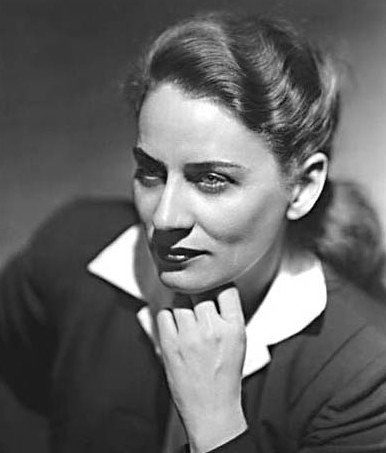 |
| Gabrielle Roy |
According to the National Post, Grade Eleven students in the Lambton Kent School Board are all being required to take an English course focusing on aboriginal writers only.
I protest this imperialist exploitation!
Obviously, for most of these kids, Indian culture is not their own culture. So, by the logic of the day, they have no right to these books.
But then again, if we ask aboriginal students to read books written by non-aboriginals, of for that matter to write in French or English, it is also not cultural appropriation.
Instead, they are being subjected to cultural genocide.
Yet it is not cultural genocide if the books are Indian, and the students not.
If there is logic here, rather than pure prejudice, it escapes me.
The local authorities, of course, make their case.
Why, the authorities argue, should Ontario kids be studying Shakespeare?
“Hey, I love Lord of the Flies. I love Shakespeare,” Sherman said. “But really, we’re talking about 15th century Veronese landlords (Romeo and Juliet) or something like that. Does that resonate with Canadian kids? Or the British schoolboy class structure?”
Isn’t there another, more obvious, option?
Have they never heard of Canadian literature?
Not, I suppose, if they to have gone to Canadian schools.
I recently came across a discussion thread in which fellow Canadians found they could not name an actual Canadian book that they had studied in high school.
Me neither.
It may have changed recently, but when I went through, we got some Canadian poems, some Canadian short stories, but nothing so long as a novel.
As a result, I fear, the typical Canadian thinks and knows too little of Canadian culture. I think a lot of us were shocked when Alice Monroe won the Nobel Prize. Alice Monroe? Have foreigners heard of her? Do foreigners actually read her? Who the heck is she, anyway?
This strikes me as a spectacular failing on the part of Canadian governments. In what other country is the literature better known by foreigners than by the locals? It is as though Canada’s governments are deliberately undermining both Canadian culture and Canadians’ sense of being a nation.
It is the duty of a government, and of public schools, to promote national unity and a sense of national identity. That is what government schools are there for: to imbue good citizenship.
For as long as anyone can remember, Canadian governments have actually been doing the reverse. Most Canadians grow up with a sense that there is no Canadian culture. And none other than the current Canadian prime minister has actually made this claim.
If a Canadian kid wants to be a writer, in turn, he is given no models. He or she grows up, as I did, believing literature is something that happens only elsewhere.
This leads to a reflection: what books should be taught in Canadian high schools? What are the essential chronicles of the Canadian experience?
Obviously, not Canadian Indian literature, as such, and only Canadian Indian literature. This is the colonial mentality perpetuated: now, instead of being colonized by the British and Americans, we who are not Indian—the vast majority of Canadians-- get to be colonized by the Indians. No improvement.
As of the 2011 census, 4.17% of Canadians saw themselves as of native ancestry. More said English, French, Irish, Scottish, German, Italian, or Chinese. The largest group, bless them, said Canadian. The native population in Ontario, where these schools are, is even smaller. And, we are often told, different native cultures are not interchangeable: an Iroquois has no more in common with a Cree than an Italian does with a Finn. So virtually nobody here is reading about their own culture.
Recent Canadian literature has been caught up in the same Canadaphobia. Instead of presenting something universally Canadian it tends to focus on some other cultural group, portraying it as separate or even alienated from the Canadian mainstream. Case in point: Canadian Indian literature, presented and considered as a separate entity. Hardly a way to built Canadian identity and solidarity.
The books studied in Canadian schools should promote Canadian unity. This does the exact opposite.
This does not mean the novels chosen should ignore the experience of minorities. The Canadian experience is largely the immigrant experience. But said minority experiences ought to be about the attempt to integrate, not to separate.
I have a few suggestions:
Sunshine Sketches of a Little Town
Anne of Green Gables
The Tin Flute
The Wars
The Apprenticeship of Duddy Kravitz
The Luck of Ginger Coffey
Fifth Business
Roughing It in the Bush
Two Solitudes
Who Has Seen the Wind?
The reader may have others.
It is time we started thinking, and writing, for ourselves.
Monday, May 15, 2017
How the Irish Discovered Canada

Here's where I lose you. Nevertheless, my commitment to truth requires me to tell you that the first name by which what is now Canada was known to Europeans was “Great Ireland.” And there is real evidence that the Irish were here before Columbus, and before even the Vikings.
Hear me out. First, a brief summary of points. If it does not pique your interest, very well. Do what you need to do.
- We know that the Vikings were in North America before Columbus. If they could get here, without it becoming common knowledge back in Europe, others could as well. (Perhaps many others, but that's beyond our scope.)
- The Irish are obvious candidates based on pure geography. Ireland is an island, after all, with Europe's greatest proportion of coastline, and the westernmost point of Europe.
- The Icelandic sagas, once thought legendary, turned out to be true. We have similar Irish legends, the imramha, older, that make broadly similar claims. They could, then, be true as well.
- The Vikings themselves, in their sagas, claim that the Irish were already in the New World when they arrived. This is an impartial witness.
- Tim Severin (The Brendan Voyage) has proven that it was technically possible to sail to the New World in a currach of the sort used in Ireland for over a thousand years. Would nobody ever have done so?
- The Irish from ancient times believed in a promised land of the blessed far away in the Western sea. They had motive, in other words. Believing this, would none of them ever try to reach it?
- Irish monks were in Iceland before the Vikings arrived in the 9th century. This means they were able to navigate on the open sea, and had made the most difficult part of the crossing.
- There are stones in the Eastern US with inscriptions which appear to be in Irish script--according not just to amateur archeologists, but to celebrated professionals.
- The DNA of modern Indians in Eastern Canada (or as we commonly call them in Canada, “First Nations”) suggests a significant genetic difference with other North American Indians, and specifically, a significant element of Western European ancestry.
This seems to add up to a balance of probabilities that the Irish were in North America before either the English or the French. Or the Spanish, or Portuguese, or Vikings.
To recap:
We know that the Irish could, as a practical matter, have reached North America.
We know that they had a strong incentive to do so: they believed paradise was here.
We know that they had a window of opportunity of perhaps a thousand years in which to do so.
We know that they did indeed try to do so.
We know that they got as far as Iceland.
We have independent testimony that they did get here—a rare level of confirmation for anything this ancient.
And we have some archeological evidence.
You could not hang a man on this evidence. But the balance of probabilities does seem to tip well to one side.
Most historians and anthropologists currently reject the idea of Irish-American contact before Columbus. But they may reject it mostly for political reasons—few academic subjects, after all, are as political as history. When the Manitoba schools proposed introducing discussions of possible pre-Columbian European contact, Jack Steinbring, an anthropologist with the University of Winnipeg, objected that any such ideas were “appropriately compared with apartheid or any other form of racial supremacy” (Marc K. Stengel, “The Diffusionists Have Landed,” The Atlantic, Volume 285, No. 1, January, 2000, pp. 35-48). Too many popular authors in the past have argued that any accomplishments of Native American culture suggest either early contact with Europe, or alien visitors―as if North American Indians were incapable of figuring out anything for themselves. Von Daniken (Chariots of the Gods), Gavin Menzies (1421: The Year China Discovered America) and others like them, have poisoned this well.
But we do not claim here that the Irish brought potatoes to the Native Americans, or built their mounds. Only that the Irish are more likely than North American Indians to write in Irish.
Of course, any one of our premises may themselves be false. If the premises are wrong, the conclusions do not follow.
Let's look at each of them in detail.
1. Vikings were in North America before Columbus, without this becoming common knowledge.
Before 1837, few supposed that the Vikings might have been in North America before Columbus. But in that year, the Danish historian Carl Christian Rafn pointed out the possibility that the “Vinland” mentioned in the old Norse legends could have been America.
For over a hundred years this remained only a theory, though one commonly cited. Then, in 1961, an actual Viking settlement was discovered and dug up by Helge and Anne Stine Ingstad in a farmer's field in the remote north of Newfoundland, at L'Anse aux Meadows. The digs turned up distinctively Norse artifacts, including worked iron. Nobody now can seriously doubt that the Vikings were in North America by around 1000 AD. Goodbye, Columbus.
Yet, because of difficult relations with the native inhabitants, the colony was abandoned and forgotten; lost to history for a thousand years. The Danes remained vaguely aware that they had once been in Greenland, but not on the North American continent.
The same thing, then, could have happened with other early visits to America, even planted colonies.
There is a simply principle involved. Suppose you came upon a vast land that nobody else knew about. Suppose it was rich with fish, as the East Coast of Canada certainly was; perhaps also with furs, perhaps with fruit and game, and opportunities to trade. You have two choices: go home and tell everyone else about it, and share the wealth; or keep it to yourself and reap the rewards alone.
The first instinct of most people, I expect, would be to keep the secret. Or share it only with a chosen few, as many as might be needed to effectively exploit the new resource. Rumours might spread, but not official knowledge.
It should be no surprise then if Europeans quietly visited and even lived in North America long before Columbus. Columbus may have only been the first person to arrive in an official capacity, inclined and required to spread the news back at some European court. So that he became famous—and died poor.
2. The Irish are obvious candidates for having sailed to North America based on pure geography.

The Mercator projection traditionally used for flat maps exaggerates the expanse of the North Atlantic, misrepresenting the true distance between Ireland and the New World. You may not be aware of how close they are. An azimuthal equal-area projection such as the above, from Wikipedia, gives a more accurate view. While not exactly next-door neighbours, there is no other place in Europe as close to North America as Ireland as the cormorant flies or the currach sails. It is less than half the distance Columbus was faced with—3,300 km versus 7,400 km. It is roughly the air distance from Winnipeg to St. John’s, to visit Mum for Christmas. Note as well that there are islands for convenient rest stops in between, in the not-too-distant north.
The prevailing winds in Western Europe blow mostly west to east, discouraging voyages westward. Columbus beat this by first sailing south to the Horse Latitudes. The Irish had a similar option. If one can make it as far north as Iceland, the prevailing winds at that latitude blow east to west, making a transatlantic crossing practical in an ocean-worthy sailing ship. And there are southerlies that blow towards Iceland from the Irish west coast. This is exactly how the Vikings did it, later, from their bases in Ireland. The Vikings had to sail to Ireland first, in order to make it further west. This is apparently how John Cabot did it much later. The Irish, in theory, could have done the same.
And we know the Irish were in Iceland before the Vikings (see below). That's the hardest part of the trip, the longest open-sea passage, already done.
3. The imramha say the Irish found a large land mass in the distant west.
The imram is an ancient Irish literary genre, a sea adventure story; like the voyages of Sinbad, of Robinson Crusoe, or the Odyssey. The most famous surviving examples (using imram in its wider sense) are the Voyage of Bran and the Voyage of Saint Brendan. If nothing else, even if they are nothing but fable, the existence of the imramha (plural form) demonstrate that the Irish of pre-Viking days were oriented toward the sea, and sailors, and as sailors sought adventure. Such stories emerge only out of thoroughly seagoing cultures.
But the imramha also, as a standard element, tell of voyages into the far west, and of lands discovered there. Odd if only a coincidence--as opposed to demonstrating some general knowledge of a land off to the west across the sea.
The Voyage of Bran, for example, believed to be recorded in the 8th century, tells of Bran and his shipmates discovering a “Land of Women” across the Atlantic Ocean, a place with fine food in abundance where the lovely local women immediately pair off with the Irish sailors. The tars return to tell the tale, but then immediately head back (wouldn't you?) and are not heard from again.
The Voyage of Mael Duin, another imram from the same period, tells a similar tale of this “Land of Women” off in the distant west.
This sounds like every sailor's dream in his hammock alone at sea. But then, it also sounds like what an ordinary sailor is most likely to remember about a real new port of call: the fresh food after weeks of dried rations, and the beauty of the women—any women, after weeks of forced solitude. Not that native Canadian women are not beautiful: they are.
The Voyage of Saint Brendan is yet more interesting. The voyages of Bran and Mael Duin might be dismissed as possibly pure fiction. But Brendan was a real, historical person of whom we have independent knowledge. His story makes at least this claim to be real history.
Our oldest copies of the Brendan story date to the early 9th century, but recount events that, if they really happened, can be dated between 512 and 530 AD. That's a thousand years before Columbus, and five hundred years before the Vikings.
This is the tale they tell.
With a crew of companions, the holy monk Brendan sets out from the Dingle Peninsula on the coast of Kerry sailing north and west. After seven years at sea, island to island, sailing mostly in circles driven by the wind, they arrive at a large land mass, so large they cannot find its bounds. They identify it as “The Promised Land of the Saints.”
It is a land “thickly set with trees, laden with fruits.” “All the time they were traversing that land, during their stay in it, no night was there, but a light always shone.” At a great river, they meet a “resplendent youth,” who knows all of their names, and explains that they must return home. As they depart, they gather some of the fruits of the land, along with “various kinds of precious stones.” (Voyage of St. Brendan, Denis O'Donoghue translation, 1893). They return home uneventfully.
This sounds like a vision of an earthly paradise: eternal sunlight, angels, precious jewels lying on the ground. This is not surprising, because the Irish always thought of paradise as lying somewhere in the far west, across the sea.
But there is one significant detail that cannot be so dismissed. In exploring the land, “One day, … they came to a large river flowing towards the middle of the land, which they could by no means cross over.” The river is also mentioned by the angel as the most prominent feature of the place: “The great river you see here divides this land into two parts.” Portrayals of Brendan's destination on later maps usually show it split in two by this river.
There is nothing in the traditional conception of paradise, Irish or Biblical, that suggests this.
It does, on the other hand, describe well the east coast of Canada, split by the Gulf of St. Lawrence.
Granted, it seems unlikely that this one voyage discovered the St. Lawrence in a claimed forty days of wandering (itself a number with religious significance). But that is not a necessary hypothesis—only that the collective experience of Irish mariners produced rumours of a land far across the sea split by a huge river, the knowledge of which informed the author of the Brendan story.
Indeed, the Brendan story itself does not claim that Brendan was the first Irishman to make the voyage. Rather, he is told of this land by another sainted monk or monks named Barinthus, or Saint Finnbarr, or Barrind, or Saint Mernoc, who had himself made the journey—apparently many times. And he is guided to the new land by an Irish-speaking pilot taken on at one of the islands on the way, the Island of Sheep, who seems to have been there before. The elder monk who advises Brendan also reports the land to be split in two by a great river.
This suggests something of a regular commerce between Ireland and the coast of Canada at some remote time.
As to Canada being a land “thickly set with trees, laden with fruits,” this contrasts rather sharply with Cartier's first recorded description, a thousand years later, of Canada, that “this, surely, is the land God gave to Cain.” But this still may be an accurate description. The Vikings made the same claim about “Vinland”—Northern Newfoundland, as we now know. If it is not true now, at least of Northern Peninsula of Newfoundland, perhaps the climate of the area has changed in 1,500 years. Many scientists indeed believe this, and speak of a “Medieval Warm Period.” Tim Severin, in The Brendan Voyage, claims that there were in fact three separate Medieval warm periods, each encouraging such a description: 300 to 550 AD, 700 to 800 AD, and 900 to 1200 AD (Severin, loc 3254). The Vikings took advantage of the last of these. If the Irish sailed in the first of these, the description could be fully justified by the facts on the ground. Even if they, like Cabot or the Vikings, were speaking of a place as far north as Northern Newfoundland.
And they were not. The Viking sagas place Great Ireland inland and further south.
It could be a fair description of any place south of Newfoundland, even today, if encountered in summer. This Cartier too described (speaking specifically of PEI) as “the fairest land that may possibly be seen full of goodly meadows and trees.” And, just like Brendan, he found the ground littered with diamonds and precious stones. He brought back a shipload—of what turned out to be quartz.
The other prodigy on which he remarked extensively was of the huge river which split this land in two. He wrote to his king of “The great river which flows through and waters the midst of these lands of yours, which is without comparison the largest river that is known to have ever been seen.”
Even if the Irish description is wrong, and even though it tallies with both Viking and French descriptions; even then we yet have evidence here that the Viking voyages to the New World were inspired and informed by knowledge of earlier Irish voyages. The Viking description of Vinland as a place of natural bounty, if inaccurate in fact, may then suggest that they had expectations based on the Irish legend.
And why not? Dublin was de facto something like the Viking world capital at the time of their North American discoveries. Any Viking expeditions to the New World had to sail from Ireland. And Leif Erikson discovered the New World on the same expedition on which he brought the new Christian faith to Greenland (so say the Heimskringla and the Saga of Olaf Tryggvason)―a faith that came to the Northmen from Ireland (MacManus, p. 285). Might not this new faith bring with it some knowledge of the voyages of the great saint? And an urge to emulate him?
In any case, we can assume that the Norsemen, settled in Ireland, built on the knowledge of Irish sailors who came before them. They intermarried (see, for example, references in the Saga of Thorfinn Karlsefne—or the genetics of modern Icelanders, which shows a substantial quantum of Irish blood). Irish names such as Duffy, Cormac, and Patrick appear in the Norse sagas (MacManus, p. 384). Irish names like Doyle and MacManus are of Viking origin. We have independent evidence that they employed Irish seamen as sailors and guides: the sagas speak of Irishmen on Viking ships (Beamish, The Discovery of America by the Northmen in the Tenth Century, London, 1841, p. 183). This being so, the fact that the Vikings made it to North America is itself evidence that the Irish also made it here―in about 1000 AD, with the Vikings, if not before.
If, as noted, the Irish descriptions of the New World sound a bit too fulsome or fanciful to be a part of an accurate history, let's compare the Viking descriptions of Vinland:
“The nature of the country was, as they thought, so good that cattle would not require house feeding in winter, for there came no frost in winter, and little did the grass wither there.” (Saga of Eric the Red, Beamish translation, 1864). So—no frost in winter on the tip of Newfoundland's Northern Peninsula?
The morning dew was sweet to the taste.
The Vikings spent their days gathering salmon larger than they had ever seen, and grapes which grew wild everywhere.
While in Vinland, the Danes encountered a tribe of “unipeds,” men who have only one foot. Thorvald Erikson is killed by one (Saga of Thorfinn Karlsefne, Beamish, p. 101).
It all sounds rather improbable. Yet the basic narrative proved true.
So why not the imramha?
Are you troubled by that “resplendent youth” who, in the Brendan story, seems to speak to the monks in their own language and to know their names? Surely that is something supernatural? Perhaps not. Perhaps it is further evidence of an Irish settlement. Tim Severin, in The Brendan Voyage, suggests that, given some exaggeration by the storyteller, he may have simply been an Irishman already living there.
4. The Vikings themselves claim that the Irish were already in the New World when they arrived.

Here's our independent witness. What motive would the Vikings have had to downplay their own discovery? Sailors tales strive for wonder; this makes the thing seem more pedestrian.
Carl Christian Rafn, the same historian who first pointed out the references to Vinland in the ancient sagas, and identified them correctly as describing the coast of North America, also quotes a manuscript codex from the time of the sagas to read:
If the Viking sources have been correct on so much else, why not give them credit here? They say there were “white men,” not native American Indians (skraelings), living somewhere south and west of Vinland.
And if, as archaeological evidence now suggests, Markland was Labrador and Vinland was Newfoundland, what is south and west of Newfoundland? What, from the direction of Europe, is “somewhat behind”? New Brunswick, the Gaspé, and the Gulf of Saint Lawrence.
The Viking source, moreover, says the Irish used to sail there, before the Vikings did. Au Canada.
The Landnamabok, speaking of Ari Marsson, states that this “White Man's Land” is also called “Great Ireland.”
This implies, first, that the land mass was much larger than Ireland proper, and second, that its inhabitants were in some significant part Irish.
The Eyrbyggja Saga says the people there “seem to speak Irish.” This could have been no ignorant opinion on their part: the voyage described in the saga began in Dublin. But “seem to speak Irish” is exactly the impression we would expect of a group that had been isolated from the mother country for some time by sea. Just as Quebeçois seem to speak French.
The Landnamabok says the people of Great Ireland across the sea are aggressive Christians, and baptize captured Vikings. The Hauksbok says they have white skin and white (blonde?) hair. In the Saga of Eric the Red, skraelings report that the inhabitants of Great Ireland wear white clothing, carry poles in procession to which clothing is attached, and call out with a loud voice. What can that mean? Possibly a religious procession, with chanting. Mulloy asserts that white was the ecclesiastical colour both among the Irish and, later, the Danes (The Irish in America 1000 Years before Columbus, p. 9; also citing Munch, “Symbols relating to Ancient History,” and the Book of Ballymote). In any case, the passage asserts that the inhabitants had white cloth, unlike the skraelings, who wore skins.
Note the multiple sources. The Landnamabok, the Saga of Eric the Red, the Eyrbyggja Saga, and the Hauksbok all speak of this “Great Ireland” off to the south and west of Vinland. It is rare to get this level of confirmation of anything in the ancient or Medieval world.
One gets the feeling there is an elephant in the room. A big green one, winking and smoking a clay pipe.
One might argue that, if the Irish had been here, we ought to see traces of that—traces in Indian culture.
No, not necessarily. In fact, it would be rather unlikely. Given that the Indians had no writing, cultural traces can easily disappear within one or two generations.
That said, it seems there are what might be evidence of some alien presence in Indian lore.
The Sioux historian Vine Deloria Jr., author of Custer Died for Your Sins, complains that mainstream archaeology never asks Native Americans for their own traditions of what happened before Columbus. If they did, he says, they would find that “numerous tribes do say that strange people doing this or that came through our land, visited us, and so on. Or they remember that we came across the Atlantic as refugees from some struggle, then came down the St. Lawrence River, and so forth” (Stengel).
Down the St. Lawrence River.
Father LeClercq discovered such a legend among the Micmac of Gaspé and the Miramichi—a highly plausible location for Great Ireland according to the Viking description. i Alexander Mackenzie discovered a legend among the Chipewyan, that they had come from afar across a vast lake. ii
Among the Micmac, LeClercq also found a pre-existing veneration of the cross.
LeClercq’s observation is confirmed by another early missionary voice, Bishop de Saint Valiers of Quebec, who writes of the present Miramichi River:
Saint Valiers says that the oldest man of the tribe claimed he personally remembered the arrival of the first French ship, and the veneration of the cross among his people was known long before this (LeClercq, p. 190).
Champlain, too, the first recorded European to enter the Minas Basin of the Bay of Fundy, reported finding there “a very old cross all covered with moss and almost all rotten, a plain indication that before this there had been Christians there” (Champlain, The Voyages of 1604-1607, W. L. Grant, trans., Scribner, 1907, p. 113 ).
Of course, the cross is a simple enough image for the Micmac to have come to it as a special and powerful symbol independently.
6. Tim Severin has proven that it was possible to sail to the New World in a currach.
The Voyage of Saint Brendan gives details of the construction of Brendan's currach:
Unlike these, Brendan's currach sounds like no generic or fairy-tale ship: it is a real, specific, ship.
The same thought struck British writer and adventurer Tim Severin. In 1976, from this description, he was able to actually build a recreation of Brendan's craft.
Then he sailed her from the Dingle Peninsula to Peckford Island, Newfoundland.
In doing so, he demonstrated that it was entirely feasible for Brendan or other Medieval Irishmen so inclined to have sailed from Ireland to the New World in the boats they had available.
Severin believed he was also able to identify some of the landmarks described in the accounts of Brendan's voyage, which might otherwise have seemed fantastic. For example, Brendan visits an island he names “The Island of Sheep,” with “many flocks of sheep, all pure white, so numerous as to hide the face of the land.” The sheep are “larger than oxen” due to having “in all seasons abundant pasture.” Making allowance for some hyperbole, Severin points out that this matches the Faeroe Islands, which have a temperate climate, and even today are well known for the quality of their wool. In fact, Severin observes, the Danish name “Faeroes” appears to mean “Island of Sheep”--Brendan's own name for the place. Either the association was that obvious, or, more likely, the Vikings were knowingly following in the footsteps of Brendan and the Irish (Severin, loc. 1765).
Next to the “Island of Sheep,” in Brendan's original narrative, is the “Paradise of Birds,” “covered with snow-white birds, so that they hid its boughs and leaves entirely.” This too sounds like the Faeroe Islands, “renowned for their magnificent variety of bird-life” (Severin, loc. 1778). Migratory birds have few other places nearby to pause, and so regularly congregate there. Cartier, too, on his voyages, found “Islands of Birds” in the North Atlantic.
Some time after this, the saint comes to a “coagulated sea”: dead calm, and “like a thick curdled mass.” Severin argues that this sounds like ice forming in these northern waters: frazil ice, an early stage of pack ice development (Severin, loc. 3986).
The Irish monks encounter many whales—and so does Severin on his journey. “Surely the … story of Jasconius, the friendly 'great fish' who returned again and again to Saint Brendan's leather curragh, is rooted in the actual reaction of the great whales when they meet leather boats at sea and come back time after time to inspect the stranger at close quarters” (Severin, loc. 4135). At one point the Irish monks are attacked from one direction by a great sea monster, “spouting steam,” who is then killed by another monster coming from the opposite direction. Severin suggests that this could have been a killer whale, common in these seas, attacking some other variety of whale, seen breaching.
On the Feast of Saint Peter, the ancient account relates, the monks come to sea water so clear that they can see the different kinds of fish below them: “the fishes were visible in great shoals, like flocks of sheep in the pastures, swimming around, heads to tails.... For eight days, even with a favourable wind, and all sails set, they were scarcely able to pass out of this pellucid sea.” Severin does not say it, but this sounds very much like a description of the bounty of sea life in the shallows of the Grand Banks off Newfoundland. Cabot made a similar observation when crossing this great fishing ground: “The sea is full of fish which are taken not only with the net but also with a basket.”
Soon after this, the Saint encounters a “floating pillar of crystal.” Although plainly visible, it takes the monks three days to reach it. “It was covered over with rare canopy, the material of which they knew not; but it had the colour of silver and was hard as marble, while the column itself was of the clearest crystal.” Severin argues that the description is so precise it must come from direct experience of an iceberg: “it would be impossible for the storyteller to imagine the details without first-hand knowledge at his disposal” (Severin, loc. 4135).
There are, of course, many icebergs off Newfoundland's coast.
Ask the captain of the Titanic.
The Irish adventurers come in their wanderings to an “Island of Smiths,” “very rugged and rocky, covered over with slag, without trees or herbage, but full of smiths' forges.... they heard the noise of bellows' blowing like thunder, and the beating of sledges on the anvils and iron.” Hairy inhabitants throw slag at the boat. “It fumed up like a heap of burning coals, and a great smoke arose as from a fiery furnace.” As the boat flees, “the whole island seemed one globe of fire, and the sea on every side boiled up and foamed.”
Severin sees this as an undersea volcanic eruption, coloured by the awed imaginations of the spectators. He points out that such eruptions have occurred recently in a small group of islands off the coast of Iceland called, interestingly, the Vestmannaeyjar group. “Vestmannaeyjar” means ”Westmen's Islands”-- the Vikings called the Irish “Westmen” (Severin, p. 2674). This might again indicate Viking awareness that the Irish had come before.
It seems unlikely that Brendan himself happened to sail by when a new volcanic island was forming. Indeed: but this is then strong evidence that there was more than one journey from Ireland to Canada during the period. There were so many that at least one Irish ship passed by during such an event, and the author of The Voyage of Saint Brendan records this collective memory.
Soon after this, Brendan comes to a “large and high mountain in the ocean” with “great smoke issuing from its summit.” Its cliffs are “black as coal.” One of the monks jumps off the boat onto the island, and catches on fire.
Severin considers this a description of the active volcanoes on the mainland of Iceland, most probably either Hekla, Eyjafjallajokul, or Katla, and suggests the landfall could have been either the Reykanes Peninsula or Dyrholaey (Severin, loc. 2713).
Brendan sails through a thick cloud just before arriving in the Promised Land of the Saints: “a dense cloud overshadowed them, so dark that they could scarcely see one another.” This sounds like fog, extremely common off the Grand Banks and along the Canadian East Coast generally. “The naval handbooks advise that visibility is less than five miles between forty and fifty percent of the time during May, June, and July” off the east coast of Newfoundland (Severin, loc. 4034).
Finally, the Voyage of Saint Brendan notes that Brendan and his colleagues sail home “in a direct course,” unlike their circuitous journey west, straight to his home monastery in Ireland. As Severin points out, this too fits the geographical realities (loc. 4171). At Canadian latitudes, the prevailing westerly winds blow directly to the coast of Ireland. The journey west to east is much easier than that from east to west.
This leads to an obvious additional speculation: given the favourable winds, might Native North Americans have ever made the journey eastward before Columbus, and landed on the coast of Ireland?
It seems they did. We have an actual eyewitness account that, in 1477, two strange humans, a man and a woman, washed up on the shores of Galway in Ireland. The witness, of course never having seen nor heard of a Native American, thought they looked Chinese. They were “on two pieces of wood”―perhaps dugout canoes.
And who was our eyewitness?
Christopher Columbus.
What, you might ask, was Columbus, in the years before his own expedition, doing on the West coast of Ireland? Perhaps he was just trading, like any sea captain. Perhaps, knowing as most of Europe did at the time of the voyages of Saint Brendan, he was here to learn from the Irish, if possible, how to get to the farther shores of the Atlantic Ocean. Or perhaps, here by chance, the appearance of these strange people first inspired him to make the westward journey.
In any case, if Native Americans washed up on Irish soil at this particular moment, when Columbus was there to see, it seems likely that the event had happened before. Leading the Irish to know of a land beyond the western sea. And so perhaps to seek it.
Severin himself is quick to say that his voyage demonstrates only that the trip described in the Voyage of Saint Brendan was possible, not that it happened. That said, his ability to correlate details of the imram with the actual geography is also enticing. It is not only that most of the islands and sights the author of The Voyage of Saint Brendan records can be related to actual places. It is at least as impressive that Brendan comes to each of these places at times in a sequence that seems plausible for an actual journey.
Yet Severin, modestly, writes, “in the final analysis, the only conclusive proof that it had been done will be if an authentic relic from an early Irish visit is found one day on North American soil. Perhaps it will be a rock scratched with an early Irish inscription” (Severin, loc. 4122).
And do we have any such evidence?
Actually, it seems that we do. More on that later.
7. The Irish from ancient times believed in a promised land of the blessed far away in the western sea.
What would have possessed Brendan, or any other Irishman, to make such a perilous journey into the western waves? Why would they have wanted to go there in the first place?
As it happens, they had the strongest possible incentive. Irish folklore has since pagan days imagined an earthly paradise to be somewhere off across the ocean to the west. The place has had various names: Tir na nOg (“The Land of Youth”), “The Land of the Living,” Hy-Brasil, “St. Brendan's Isle,” “The Valley of Delicacies,” “The Plains of Honey,” or “The Land Over Sea.” The name “Hy-Brasil” may itself imply Irish colonization: it seems to mean “land of the descendants of Breasal,” a clan from the northeast of Ireland. (And no, the Irish Brasil does not seem to bear any relation to the Portuguese naming their New World colony “Brazil”). The most-often cited feature of this land across the sea is that it is a place “where youth never grows to old age” (Midir to the Queen Edain, translated by Joyce, McManus, p. 99), where “all are young” (Ethna Carberry, “Four Winds of Eirinn”). There, there is neither grief nor care (Midir), and food is plentiful. In a folk phrase, in Tir na nOg, “happiness could be bought for a penny.”
There is little question that this Irish concept inspired explorers. According to contemporary Spanish writer Pedro de Ayala, when John Cabot sailed to the New World in 1497, he was guided by men from Bristol who had previously found Hy-Brasil. When Ponce de Leon, who had sailed on Columbus's second voyage, discovered Florida, he was reputedly looking for a fountain that gave the gift of eternal youth—the most famous characteristic of the Irish “Land of the Young.” And then there was Columbus's own mysterious visit to Galway in 1477.
If later explorers from other lands seem to have been urged on by this Irish idea, why not the Irish themselves?
Of course, this can work two ways: the belief in a wonderful land beyond the seas may have inspired purely fictional accounts of going there. Yet it is equally likely that the belief in a wonderful land beyond the seas was originally inspired by actual voyages to North America.
In either case, or all, the idea that there might be something utterly fantastic to be found off in the Western Sea, an earthly paradise, would have to be a powerful incentive for real people in Ireland to try to get there.
Recall the old argument for evolution: given enough monkeys at enough typewriters, over enough time, one of them is going to write the complete works of Shakespeare. Given enough Irishmen, over enough time, trying to reach a land to the west, one or more of them is going to get there.
Even were they a bunch of monkeys.
How much time did they have? Given Tim Severin's successful voyage, they had as much time as they had the technology of the currach. How long was this? How long did they have currachs?
According to Caesar's Gallic Wars, the Celts had good strong ocean-going ships by at least the first century BC. Caesar also says they were highly knowledgeable about astronomy, a valuable skill for navigation. Tacitus, writing in the first century AD, speaks of Ireland as a place of many ports and much sea commerce. The Annals of Tighernach assert that Cormac MacArt launched a fleet in 222 AD that sailed over the sea for three years (Seamus McManus, The Story of the Irish Race, NY: Irish Publishing Company, 1921, p. 85). The Irish King Moghcorh of Munster is recorded in Irish annals to have invaded Denmark by sea in 296 AD (Beamish, p. 217).
The reality of Irish sea power in ancient times is perhaps best attested to by the curious circumstance of the dog that did not bark in the night. Why did the Romans never invade Ireland?
Everywhere else, they were stopped only by inarable land or lost battles. Ireland was a small island with rich lands and mineral resources. Tacitus attests that they indeed wanted to take it.
The answer almost has to be that the Irish sea power was too great for the Romans to attempt the crossing. Instead, the Romans in Britain were obliged to regularly fend off sea raids from the fierce Hibernians.
In any event, the bottom line seems to be that written records of the currach specifically date back to 100 BC; it is impossible to know how much earlier then this they were in use.
Being conservative, then, we have a window of about 1000 years during which the Irish had both the will and the means to visit North America, before the Danes arrived and took the torch of western exploration from them.
One final consideration: whether they indeed took advantage of the opportunity or not, the Irish folk belief that the land across the Western Sea was a kind of paradise may well, in the back forty of many minds, have added to the later Irish Canadian love for their adopted country. Canada was and remains the western paradise.
8. Irish monks were in Iceland before the Vikings arrived in the 9th century.
When the Vikings first arrived in Iceland, they found Irish books, bells, and croziers “and many more things” there, “from which could be seen that they [the previous inhabitants] were Irishmen” (The Schedae of Ari Frode, Beamish, p. 174; Landnamabok, p. 176).
This Viking account is confirmed by the writings of the Irish monk Dicuil, a retainer at the court of Charlemagne, who wrote in 825 a universal geography titled The Book of the Measure of the World. In it, he is able to describe, from Irish sources, several northern lands unknown to classical authors. He knows of the Faeroes, on which, he says, Irish hermits had lived by his time “for nearly a hundred years” (Severin, loc. 1778). Recent archeological evidence has now confirmed that the Faeroes were settled from 350-550 AD, long before the Vikings arrived (http://o.canada.com/news/pre-viking-find-on-faroes-puts-patina-of-proof-on-st-brendans-discovery-of-canada, July 9, 2014).
Dicuil then states that Irish monks were making regular journeys to an island so far north that the sun barely set during the summer solstice—the night being then so bright that they could pursue the pleasant pastime of “picking lice from their shirts.” Which no doubt took a steady eye, and good visibility. This sounds like Iceland. If you consult our map, you will see that it is located just below the Arctic Circle― in the “Land of the Midnight Twilight.”
Dicuil goes further. He says that the Irish monks had sailed a day's journey north of this land of the midnight sun, and found the edge of a frozen sea. The Arctic pack ice?
When the Vikings landed in Greenland, they found that someone had also been there before them. Severin says they encountered “human habitations, both in the eastern and western parts of the country, and fragments of skin boats and stone implements.” Severin argues that these are unlikely to have been left by the Dorset culture, the aboriginal inhabitants of Greenland at the time: their skin boats were not cured, so that the skins would rot quickly. Moreover, there is nothing else to place them in this part of Greenland. This might, then, be evidence that the Irish, with their skin currachs, were here too (Severin, loc. 3289).
9. There are stones in the Eastern US with inscriptions on them which appear to be in Irish script.
Given the length of the Canadian and American east coast, finding physical evidence of early settlements is always going to be looking for a needle in a haystack. For comparison, with the clues in the Viking sagas, it took 125 years for the theory of Viking contact to be confirmed by an archaeological site.
There are numerous unidentified stone ruins throughout New England and eastern Canada. Traditionally, these have been dismissed as “root cellars” built by earlier but post-Columbian European settlers, then forgotten. More recently, it has become common to accept that they are pre-Columbian, but built by Indians.
It does seem odd that they are concentrated in roughly the area we posit a settlement of Irish monks to have most likely been, and that they are vaguely similar to the style of dwelling favoured on the other side of the Atlantic by Irish monks.
However, this is not yet compelling. At L'Anse aux Meadows, evidence of ironworking was found, and the Native Americans did not have iron. Nothing similar has been discovered at these northeastern mainland sites—no metal artifacts, or Irish-looking artifacts. This may not be so surprising, given the monastic vow of poverty and a way of life devoted to prayer, not industry; but it leaves us without proof of Irish habitation. Carbon dating places some of these structures in the time of Brendan’s voyage; but others seem to date to as far back as 2000 BC. Could the Irish have been here for so long?
There are also many rocks with strange carvings, petroglyphs, up and down the East Coast and well into the North American interior. In 1976, Dr. Barry Fell, in the book America BC, and in subsequent books, claimed to have deciphered many of these. He thought them to be written in Ogham, an old Irish script. Most of them, in his translations, had distinctly Christian messages.
This, of course, fits perfectly with the idea of a pre-Columbian Irish settlement consisting largely of monks.
Fell was a legitimate scientist, on faculty at Harvard. He therefore knew the proper scientific method; he was no crackpot. He was, however, writing outside his own field, which was marine biology. His claims were either savaged or ignored by orthodox anthropologists.
However, there are signs that anthropology may now be more forgiving. David Kelley of the University of Calgary, contributing editor to The Review of Archaeology, and the man primarily responsible for cracking the ancient Mayan writing system, has more recently written, “I have no personal doubts that some of the inscriptions which have been reported [by Fell and his adherents] are genuine Celtic ogham.” He goes on to say “We need to ask … where we have gone wrong as archaeologists in not recognizing such an extensive European presence in the New World” (Stengel).
Stone carvings in Irish script: this is the evidence Tim Severin said in 1976 would be decisive.
10. Genetic hints
So if there was an Irish settlement in North America a thousand years ago, what happened to it?
It is not hard to imagine. The Danish conquest of the high seas ended the independent Irish seafaring tradition. The later English conquest of Ireland kept it suppressed, requiring all goods to be carried in English ships. The English conquerors also tended to trash any traces of the Irish past. As a result, any New World Irish colony would have been cut off from the motherland and forgotten, by the time Cartier arrived in Canada, for at least five hundred years.
Matters meantime were not static in the New World. When Cartier sailed down the St. Lawrence in 1535, he found two substantial Iroquois settlements, at Stadacona (modern Quebec City) and Hochelaga (Montreal). When Champlain returned in 1608, there was no trace of either settlement, nor of any Iroquois. The local inhabitants were now Algonquin.
If that much change occurs in 67 years, one can imagine what might happen in 500.
Most likely, if it was not wiped out in war, any Irish settlement would have intermarried with and blended in with the larger population over time. Over the same period of time, the Danish settlements in Greenland had also all disappeared.
But if the Irish were here, and then assimilated to the native inhabitants, there should be one more piece of evidence available to us. At least in very recent years, we have a new tool to trace the movements of peoples: DNA.
Every male has, in the 23rd pair, two mismatched chromosomes: one “X” chromosome, which must necessarily come from the mother, and one “Y” chromosome, which must come from the father. By comparing “Y” chromosomes, which mutate over time, we can establish kinships through the male line. These extended human tribes, called “haplogroups,” are people whose DNA indicates that all share a single male ancestor.
When the DNA of Native Americans has been analyzed, we find that almost all Native American men can be traced back to two relatively recent male ancestors. One haplogroup, designated Q-M242, is shared with populations in Northeast and North-Central Asia. So far, so good—this supports the traditional idea that the American Indians arrived some 14,000 years ago from Asia across the Bering land bridge.
But a good third of Native Americans trace to a different male ancestor: R1 (YDNA). This haplogroup is not found in East Asia, but is concentrated in Western Europe.
In other words, one third of Native Americans share a relatively recent ancestor with Western Europeans.
There are several possibilities here.
First possibility: two separate groups arrived across the Bering Strait 14,000 years ago. One of them also remained in Eastern Asia: haplogroup Q. The Old World remnants of the other separated, wandered in the opposite direction all the way across the Eurasian land mass and ended up in Western Europe, leaving few traces on the way.
This is improbable on the face of it. Occam would vomit. The more so if one looks at a map of the R1 haplogroup's distribution:

Note that it is not evenly distributed across North and South America, as one would expect if the two haplogroups arrived at about the same time. Instead, it is concentrated in Eastern Canada—the very area of the New World closest to Western Europe, its point of concentration in the Old World. Is it likely that the transmission instead went all around the world in the opposite direction? Would you, if you were a haplogroup?
Second possibility: the European DNA arrived after Columbus, through intermarriage in the last few centuries between European colonists and native Indians.
This sounds likely enough.
But again, the pattern of distribution does not fit: the Portuguese and Spanish share the haplogroup, and were in Central and South America, in Florida and the American Southwest, for almost a hundred years before the English and French arrived. They had 200,000 citizens in the New World before the first Englishman or Frenchman stepped off the jetty, and continued to dominate for a further century (David Eltis, Coerced and Free Migration: Global Perspectives, Stanford, 2002). Accordingly, the European haplotype, if it came through recent intermarriage, should be strongest in exactly the places it is weakest: in Central and South America and the American Southwest.
Which leaves the third possibility. As Sherlock Holmes observed, “eliminate all other factors, and the one which remains must be the truth.” There was a substantial pre-Columbian colony in the eastern part of Canada or New England, which gradually intermarried and blended with the native population.
So, 79% of Ojibwe trace back to a European male ancestor, hypothetically Irish; 62% of Chipewyan; and 40% of Dogrib.
Note the Chipewyan, according to Alexander Mackenzie, are one of the Canadian Indian groups who have an oral tradition of having come from elsewhere across a large body of water.
Nor was this the Vikings: according to their records, their residence was brief, and they never intermarried.
One thinks of Bran and his lovesick sailors, who obviously did.
iChrestien Le Clercq, New Relation of Gaspesia, Toronto: Champlain Society, 1910, pp. 85-6.
iiJohn West, The Substance of a Journal During a Residence at the Red River Colony, London: L.B. Seeley, 1827, p. 132.
The prevailing winds in Western Europe blow mostly west to east, discouraging voyages westward. Columbus beat this by first sailing south to the Horse Latitudes. The Irish had a similar option. If one can make it as far north as Iceland, the prevailing winds at that latitude blow east to west, making a transatlantic crossing practical in an ocean-worthy sailing ship. And there are southerlies that blow towards Iceland from the Irish west coast. This is exactly how the Vikings did it, later, from their bases in Ireland. The Vikings had to sail to Ireland first, in order to make it further west. This is apparently how John Cabot did it much later. The Irish, in theory, could have done the same.
And we know the Irish were in Iceland before the Vikings (see below). That's the hardest part of the trip, the longest open-sea passage, already done.
3. The imramha say the Irish found a large land mass in the distant west.
 |
| St. Brendan the Navigator |
The imram is an ancient Irish literary genre, a sea adventure story; like the voyages of Sinbad, of Robinson Crusoe, or the Odyssey. The most famous surviving examples (using imram in its wider sense) are the Voyage of Bran and the Voyage of Saint Brendan. If nothing else, even if they are nothing but fable, the existence of the imramha (plural form) demonstrate that the Irish of pre-Viking days were oriented toward the sea, and sailors, and as sailors sought adventure. Such stories emerge only out of thoroughly seagoing cultures.
But the imramha also, as a standard element, tell of voyages into the far west, and of lands discovered there. Odd if only a coincidence--as opposed to demonstrating some general knowledge of a land off to the west across the sea.
The Voyage of Bran, for example, believed to be recorded in the 8th century, tells of Bran and his shipmates discovering a “Land of Women” across the Atlantic Ocean, a place with fine food in abundance where the lovely local women immediately pair off with the Irish sailors. The tars return to tell the tale, but then immediately head back (wouldn't you?) and are not heard from again.
The Voyage of Mael Duin, another imram from the same period, tells a similar tale of this “Land of Women” off in the distant west.
This sounds like every sailor's dream in his hammock alone at sea. But then, it also sounds like what an ordinary sailor is most likely to remember about a real new port of call: the fresh food after weeks of dried rations, and the beauty of the women—any women, after weeks of forced solitude. Not that native Canadian women are not beautiful: they are.
The Voyage of Saint Brendan is yet more interesting. The voyages of Bran and Mael Duin might be dismissed as possibly pure fiction. But Brendan was a real, historical person of whom we have independent knowledge. His story makes at least this claim to be real history.
Our oldest copies of the Brendan story date to the early 9th century, but recount events that, if they really happened, can be dated between 512 and 530 AD. That's a thousand years before Columbus, and five hundred years before the Vikings.
This is the tale they tell.
With a crew of companions, the holy monk Brendan sets out from the Dingle Peninsula on the coast of Kerry sailing north and west. After seven years at sea, island to island, sailing mostly in circles driven by the wind, they arrive at a large land mass, so large they cannot find its bounds. They identify it as “The Promised Land of the Saints.”
It is a land “thickly set with trees, laden with fruits.” “All the time they were traversing that land, during their stay in it, no night was there, but a light always shone.” At a great river, they meet a “resplendent youth,” who knows all of their names, and explains that they must return home. As they depart, they gather some of the fruits of the land, along with “various kinds of precious stones.” (Voyage of St. Brendan, Denis O'Donoghue translation, 1893). They return home uneventfully.
This sounds like a vision of an earthly paradise: eternal sunlight, angels, precious jewels lying on the ground. This is not surprising, because the Irish always thought of paradise as lying somewhere in the far west, across the sea.
But there is one significant detail that cannot be so dismissed. In exploring the land, “One day, … they came to a large river flowing towards the middle of the land, which they could by no means cross over.” The river is also mentioned by the angel as the most prominent feature of the place: “The great river you see here divides this land into two parts.” Portrayals of Brendan's destination on later maps usually show it split in two by this river.
There is nothing in the traditional conception of paradise, Irish or Biblical, that suggests this.
It does, on the other hand, describe well the east coast of Canada, split by the Gulf of St. Lawrence.
Granted, it seems unlikely that this one voyage discovered the St. Lawrence in a claimed forty days of wandering (itself a number with religious significance). But that is not a necessary hypothesis—only that the collective experience of Irish mariners produced rumours of a land far across the sea split by a huge river, the knowledge of which informed the author of the Brendan story.
Indeed, the Brendan story itself does not claim that Brendan was the first Irishman to make the voyage. Rather, he is told of this land by another sainted monk or monks named Barinthus, or Saint Finnbarr, or Barrind, or Saint Mernoc, who had himself made the journey—apparently many times. And he is guided to the new land by an Irish-speaking pilot taken on at one of the islands on the way, the Island of Sheep, who seems to have been there before. The elder monk who advises Brendan also reports the land to be split in two by a great river.
This suggests something of a regular commerce between Ireland and the coast of Canada at some remote time.
As to Canada being a land “thickly set with trees, laden with fruits,” this contrasts rather sharply with Cartier's first recorded description, a thousand years later, of Canada, that “this, surely, is the land God gave to Cain.” But this still may be an accurate description. The Vikings made the same claim about “Vinland”—Northern Newfoundland, as we now know. If it is not true now, at least of Northern Peninsula of Newfoundland, perhaps the climate of the area has changed in 1,500 years. Many scientists indeed believe this, and speak of a “Medieval Warm Period.” Tim Severin, in The Brendan Voyage, claims that there were in fact three separate Medieval warm periods, each encouraging such a description: 300 to 550 AD, 700 to 800 AD, and 900 to 1200 AD (Severin, loc 3254). The Vikings took advantage of the last of these. If the Irish sailed in the first of these, the description could be fully justified by the facts on the ground. Even if they, like Cabot or the Vikings, were speaking of a place as far north as Northern Newfoundland.
And they were not. The Viking sagas place Great Ireland inland and further south.
It could be a fair description of any place south of Newfoundland, even today, if encountered in summer. This Cartier too described (speaking specifically of PEI) as “the fairest land that may possibly be seen full of goodly meadows and trees.” And, just like Brendan, he found the ground littered with diamonds and precious stones. He brought back a shipload—of what turned out to be quartz.
The other prodigy on which he remarked extensively was of the huge river which split this land in two. He wrote to his king of “The great river which flows through and waters the midst of these lands of yours, which is without comparison the largest river that is known to have ever been seen.”
Even if the Irish description is wrong, and even though it tallies with both Viking and French descriptions; even then we yet have evidence here that the Viking voyages to the New World were inspired and informed by knowledge of earlier Irish voyages. The Viking description of Vinland as a place of natural bounty, if inaccurate in fact, may then suggest that they had expectations based on the Irish legend.
And why not? Dublin was de facto something like the Viking world capital at the time of their North American discoveries. Any Viking expeditions to the New World had to sail from Ireland. And Leif Erikson discovered the New World on the same expedition on which he brought the new Christian faith to Greenland (so say the Heimskringla and the Saga of Olaf Tryggvason)―a faith that came to the Northmen from Ireland (MacManus, p. 285). Might not this new faith bring with it some knowledge of the voyages of the great saint? And an urge to emulate him?
In any case, we can assume that the Norsemen, settled in Ireland, built on the knowledge of Irish sailors who came before them. They intermarried (see, for example, references in the Saga of Thorfinn Karlsefne—or the genetics of modern Icelanders, which shows a substantial quantum of Irish blood). Irish names such as Duffy, Cormac, and Patrick appear in the Norse sagas (MacManus, p. 384). Irish names like Doyle and MacManus are of Viking origin. We have independent evidence that they employed Irish seamen as sailors and guides: the sagas speak of Irishmen on Viking ships (Beamish, The Discovery of America by the Northmen in the Tenth Century, London, 1841, p. 183). This being so, the fact that the Vikings made it to North America is itself evidence that the Irish also made it here―in about 1000 AD, with the Vikings, if not before.
If, as noted, the Irish descriptions of the New World sound a bit too fulsome or fanciful to be a part of an accurate history, let's compare the Viking descriptions of Vinland:
“The nature of the country was, as they thought, so good that cattle would not require house feeding in winter, for there came no frost in winter, and little did the grass wither there.” (Saga of Eric the Red, Beamish translation, 1864). So—no frost in winter on the tip of Newfoundland's Northern Peninsula?
The morning dew was sweet to the taste.
The Vikings spent their days gathering salmon larger than they had ever seen, and grapes which grew wild everywhere.
While in Vinland, the Danes encountered a tribe of “unipeds,” men who have only one foot. Thorvald Erikson is killed by one (Saga of Thorfinn Karlsefne, Beamish, p. 101).
It all sounds rather improbable. Yet the basic narrative proved true.
So why not the imramha?
Are you troubled by that “resplendent youth” who, in the Brendan story, seems to speak to the monks in their own language and to know their names? Surely that is something supernatural? Perhaps not. Perhaps it is further evidence of an Irish settlement. Tim Severin, in The Brendan Voyage, suggests that, given some exaggeration by the storyteller, he may have simply been an Irishman already living there.
4. The Vikings themselves claim that the Irish were already in the New World when they arrived.

Here's our independent witness. What motive would the Vikings have had to downplay their own discovery? Sailors tales strive for wonder; this makes the thing seem more pedestrian.
Carl Christian Rafn, the same historian who first pointed out the references to Vinland in the ancient sagas, and identified them correctly as describing the coast of North America, also quotes a manuscript codex from the time of the sagas to read:
“Now are there, as is said, south from Greenland, which is inhabited, deserts, uninhabited places, and icebergs, then the Skraelings [the Viking term for native North Americans], then Markland, then Vinland the Good; next, and somewhat behind, lies Albania, which is White Man's Land; thither was sailing, formerly, from Ireland; there Irishmen and Icelanders recognized Ari the son of Mar and Katla of Reykjaness, of whom nothing had been heard for a long time, and who had been made a Chief there by the inhabitants” (Beamish, The Discovery of America by the Northmen in the Tenth Century, London, 1841, p. 183—a translation of “The Manuscript Codex, 770, c. 8vo”).
If the Viking sources have been correct on so much else, why not give them credit here? They say there were “white men,” not native American Indians (skraelings), living somewhere south and west of Vinland.
And if, as archaeological evidence now suggests, Markland was Labrador and Vinland was Newfoundland, what is south and west of Newfoundland? What, from the direction of Europe, is “somewhat behind”? New Brunswick, the Gaspé, and the Gulf of Saint Lawrence.
The Viking source, moreover, says the Irish used to sail there, before the Vikings did. Au Canada.
The Landnamabok, speaking of Ari Marsson, states that this “White Man's Land” is also called “Great Ireland.”
This implies, first, that the land mass was much larger than Ireland proper, and second, that its inhabitants were in some significant part Irish.
The Eyrbyggja Saga says the people there “seem to speak Irish.” This could have been no ignorant opinion on their part: the voyage described in the saga began in Dublin. But “seem to speak Irish” is exactly the impression we would expect of a group that had been isolated from the mother country for some time by sea. Just as Quebeçois seem to speak French.
The Landnamabok says the people of Great Ireland across the sea are aggressive Christians, and baptize captured Vikings. The Hauksbok says they have white skin and white (blonde?) hair. In the Saga of Eric the Red, skraelings report that the inhabitants of Great Ireland wear white clothing, carry poles in procession to which clothing is attached, and call out with a loud voice. What can that mean? Possibly a religious procession, with chanting. Mulloy asserts that white was the ecclesiastical colour both among the Irish and, later, the Danes (The Irish in America 1000 Years before Columbus, p. 9; also citing Munch, “Symbols relating to Ancient History,” and the Book of Ballymote). In any case, the passage asserts that the inhabitants had white cloth, unlike the skraelings, who wore skins.
Note the multiple sources. The Landnamabok, the Saga of Eric the Red, the Eyrbyggja Saga, and the Hauksbok all speak of this “Great Ireland” off to the south and west of Vinland. It is rare to get this level of confirmation of anything in the ancient or Medieval world.
One gets the feeling there is an elephant in the room. A big green one, winking and smoking a clay pipe.
One might argue that, if the Irish had been here, we ought to see traces of that—traces in Indian culture.
No, not necessarily. In fact, it would be rather unlikely. Given that the Indians had no writing, cultural traces can easily disappear within one or two generations.
That said, it seems there are what might be evidence of some alien presence in Indian lore.
The Sioux historian Vine Deloria Jr., author of Custer Died for Your Sins, complains that mainstream archaeology never asks Native Americans for their own traditions of what happened before Columbus. If they did, he says, they would find that “numerous tribes do say that strange people doing this or that came through our land, visited us, and so on. Or they remember that we came across the Atlantic as refugees from some struggle, then came down the St. Lawrence River, and so forth” (Stengel).
Down the St. Lawrence River.
Father LeClercq discovered such a legend among the Micmac of Gaspé and the Miramichi—a highly plausible location for Great Ireland according to the Viking description. i Alexander Mackenzie discovered a legend among the Chipewyan, that they had come from afar across a vast lake. ii
Among the Micmac, LeClercq also found a pre-existing veneration of the cross.
“They drew it, and wore it, religiously upon their bodies and their clothes: it presided over their councils, their voyages, and the most important affairs of their nation: their cemeteries appeared more like those of Christians than of barbarians, by reason of the number of Crosses which they placed over their tombs.” (LeClercq, 1910, p. 32).
LeClercq’s observation is confirmed by another early missionary voice, Bishop de Saint Valiers of Quebec, who writes of the present Miramichi River:
“It would be difficult to believe that this river, which is called Rivière de la Croix, had not been thus named by Christians. It is nevertheless true that it is not they who have given it this name. It derives it from certain Indians, who from time immemorial are called Cruciantaux, because they preserve among them a particular respect for the Cross, although there appears to be not a vestige of evidence from which it can be conjectured that they have ever known the mystery of it.” (Bishop Jean Baptiste de Saint Valiers, Estate Présent de l’Eglise et de la Colonie Francaise, Quebec, 1856, p. 35).
Saint Valiers says that the oldest man of the tribe claimed he personally remembered the arrival of the first French ship, and the veneration of the cross among his people was known long before this (LeClercq, p. 190).
“This man, aged a hundred or a hundred and twenty years, questioned one day by M. de Fronsac, son of M. Denis, said that he had seen the first ship from Europe which had landed in their country; that before its arrival they had already among them the usage of the Cross; that this usage had not been brought to them by strangers; and that everything he knew about it he had learned by tradition from his ancestors.”
Champlain, too, the first recorded European to enter the Minas Basin of the Bay of Fundy, reported finding there “a very old cross all covered with moss and almost all rotten, a plain indication that before this there had been Christians there” (Champlain, The Voyages of 1604-1607, W. L. Grant, trans., Scribner, 1907, p. 113 ).
Of course, the cross is a simple enough image for the Micmac to have come to it as a special and powerful symbol independently.
6. Tim Severin has proven that it was possible to sail to the New World in a currach.
 |
| Replica of the replica of Brendan's currach. |
The Voyage of Saint Brendan gives details of the construction of Brendan's currach:
“Then Saint Brendan and his companions, using iron implements, prepared a light vessel, with wicker sides and ribs, such as is usually made in that country, and covered it with cow-hide, tanned in oak-bark, tarring the joints thereof, and put on board provisions for forty days, with butter enough to dress hides for covering the boat and all utensils needed for the use of the crew” (The Voyage of Brendan the Abbot, Denis O'Donoghue translation, 1893).This level of detail is odd if the author intends merely to spin a yarn. It is unnecessary to the plot, and a bit of a distraction from it. It sounds instead like real historical information. By contrast, the voyages of Sinbad in the Arabian Nights say nothing of the construction of his ship. All that the Argonautica says of the Argos, Jason's legendary ship, is “Now when all things had been made ready by the thralls, all things that fully-equipped ships are furnished withal when men's business leads them to voyage across the sea” (Argonautica, R.C. Seaton translation).
Unlike these, Brendan's currach sounds like no generic or fairy-tale ship: it is a real, specific, ship.
The same thought struck British writer and adventurer Tim Severin. In 1976, from this description, he was able to actually build a recreation of Brendan's craft.
Then he sailed her from the Dingle Peninsula to Peckford Island, Newfoundland.
In doing so, he demonstrated that it was entirely feasible for Brendan or other Medieval Irishmen so inclined to have sailed from Ireland to the New World in the boats they had available.
 |
| Faeroes |
Severin believed he was also able to identify some of the landmarks described in the accounts of Brendan's voyage, which might otherwise have seemed fantastic. For example, Brendan visits an island he names “The Island of Sheep,” with “many flocks of sheep, all pure white, so numerous as to hide the face of the land.” The sheep are “larger than oxen” due to having “in all seasons abundant pasture.” Making allowance for some hyperbole, Severin points out that this matches the Faeroe Islands, which have a temperate climate, and even today are well known for the quality of their wool. In fact, Severin observes, the Danish name “Faeroes” appears to mean “Island of Sheep”--Brendan's own name for the place. Either the association was that obvious, or, more likely, the Vikings were knowingly following in the footsteps of Brendan and the Irish (Severin, loc. 1765).
Next to the “Island of Sheep,” in Brendan's original narrative, is the “Paradise of Birds,” “covered with snow-white birds, so that they hid its boughs and leaves entirely.” This too sounds like the Faeroe Islands, “renowned for their magnificent variety of bird-life” (Severin, loc. 1778). Migratory birds have few other places nearby to pause, and so regularly congregate there. Cartier, too, on his voyages, found “Islands of Birds” in the North Atlantic.
Some time after this, the saint comes to a “coagulated sea”: dead calm, and “like a thick curdled mass.” Severin argues that this sounds like ice forming in these northern waters: frazil ice, an early stage of pack ice development (Severin, loc. 3986).
The Irish monks encounter many whales—and so does Severin on his journey. “Surely the … story of Jasconius, the friendly 'great fish' who returned again and again to Saint Brendan's leather curragh, is rooted in the actual reaction of the great whales when they meet leather boats at sea and come back time after time to inspect the stranger at close quarters” (Severin, loc. 4135). At one point the Irish monks are attacked from one direction by a great sea monster, “spouting steam,” who is then killed by another monster coming from the opposite direction. Severin suggests that this could have been a killer whale, common in these seas, attacking some other variety of whale, seen breaching.
On the Feast of Saint Peter, the ancient account relates, the monks come to sea water so clear that they can see the different kinds of fish below them: “the fishes were visible in great shoals, like flocks of sheep in the pastures, swimming around, heads to tails.... For eight days, even with a favourable wind, and all sails set, they were scarcely able to pass out of this pellucid sea.” Severin does not say it, but this sounds very much like a description of the bounty of sea life in the shallows of the Grand Banks off Newfoundland. Cabot made a similar observation when crossing this great fishing ground: “The sea is full of fish which are taken not only with the net but also with a basket.”
Soon after this, the Saint encounters a “floating pillar of crystal.” Although plainly visible, it takes the monks three days to reach it. “It was covered over with rare canopy, the material of which they knew not; but it had the colour of silver and was hard as marble, while the column itself was of the clearest crystal.” Severin argues that the description is so precise it must come from direct experience of an iceberg: “it would be impossible for the storyteller to imagine the details without first-hand knowledge at his disposal” (Severin, loc. 4135).
There are, of course, many icebergs off Newfoundland's coast.
Ask the captain of the Titanic.
 |
| From the CIA World Factbook |
The Irish adventurers come in their wanderings to an “Island of Smiths,” “very rugged and rocky, covered over with slag, without trees or herbage, but full of smiths' forges.... they heard the noise of bellows' blowing like thunder, and the beating of sledges on the anvils and iron.” Hairy inhabitants throw slag at the boat. “It fumed up like a heap of burning coals, and a great smoke arose as from a fiery furnace.” As the boat flees, “the whole island seemed one globe of fire, and the sea on every side boiled up and foamed.”
Severin sees this as an undersea volcanic eruption, coloured by the awed imaginations of the spectators. He points out that such eruptions have occurred recently in a small group of islands off the coast of Iceland called, interestingly, the Vestmannaeyjar group. “Vestmannaeyjar” means ”Westmen's Islands”-- the Vikings called the Irish “Westmen” (Severin, p. 2674). This might again indicate Viking awareness that the Irish had come before.
It seems unlikely that Brendan himself happened to sail by when a new volcanic island was forming. Indeed: but this is then strong evidence that there was more than one journey from Ireland to Canada during the period. There were so many that at least one Irish ship passed by during such an event, and the author of The Voyage of Saint Brendan records this collective memory.
Soon after this, Brendan comes to a “large and high mountain in the ocean” with “great smoke issuing from its summit.” Its cliffs are “black as coal.” One of the monks jumps off the boat onto the island, and catches on fire.
Severin considers this a description of the active volcanoes on the mainland of Iceland, most probably either Hekla, Eyjafjallajokul, or Katla, and suggests the landfall could have been either the Reykanes Peninsula or Dyrholaey (Severin, loc. 2713).
Brendan sails through a thick cloud just before arriving in the Promised Land of the Saints: “a dense cloud overshadowed them, so dark that they could scarcely see one another.” This sounds like fog, extremely common off the Grand Banks and along the Canadian East Coast generally. “The naval handbooks advise that visibility is less than five miles between forty and fifty percent of the time during May, June, and July” off the east coast of Newfoundland (Severin, loc. 4034).
Finally, the Voyage of Saint Brendan notes that Brendan and his colleagues sail home “in a direct course,” unlike their circuitous journey west, straight to his home monastery in Ireland. As Severin points out, this too fits the geographical realities (loc. 4171). At Canadian latitudes, the prevailing westerly winds blow directly to the coast of Ireland. The journey west to east is much easier than that from east to west.
This leads to an obvious additional speculation: given the favourable winds, might Native North Americans have ever made the journey eastward before Columbus, and landed on the coast of Ireland?
It seems they did. We have an actual eyewitness account that, in 1477, two strange humans, a man and a woman, washed up on the shores of Galway in Ireland. The witness, of course never having seen nor heard of a Native American, thought they looked Chinese. They were “on two pieces of wood”―perhaps dugout canoes.
And who was our eyewitness?
Christopher Columbus.
What, you might ask, was Columbus, in the years before his own expedition, doing on the West coast of Ireland? Perhaps he was just trading, like any sea captain. Perhaps, knowing as most of Europe did at the time of the voyages of Saint Brendan, he was here to learn from the Irish, if possible, how to get to the farther shores of the Atlantic Ocean. Or perhaps, here by chance, the appearance of these strange people first inspired him to make the westward journey.
In any case, if Native Americans washed up on Irish soil at this particular moment, when Columbus was there to see, it seems likely that the event had happened before. Leading the Irish to know of a land beyond the western sea. And so perhaps to seek it.
Severin himself is quick to say that his voyage demonstrates only that the trip described in the Voyage of Saint Brendan was possible, not that it happened. That said, his ability to correlate details of the imram with the actual geography is also enticing. It is not only that most of the islands and sights the author of The Voyage of Saint Brendan records can be related to actual places. It is at least as impressive that Brendan comes to each of these places at times in a sequence that seems plausible for an actual journey.
Yet Severin, modestly, writes, “in the final analysis, the only conclusive proof that it had been done will be if an authentic relic from an early Irish visit is found one day on North American soil. Perhaps it will be a rock scratched with an early Irish inscription” (Severin, loc. 4122).
And do we have any such evidence?
Actually, it seems that we do. More on that later.
7. The Irish from ancient times believed in a promised land of the blessed far away in the western sea.
 |
| Hy-Brasil |
What would have possessed Brendan, or any other Irishman, to make such a perilous journey into the western waves? Why would they have wanted to go there in the first place?
As it happens, they had the strongest possible incentive. Irish folklore has since pagan days imagined an earthly paradise to be somewhere off across the ocean to the west. The place has had various names: Tir na nOg (“The Land of Youth”), “The Land of the Living,” Hy-Brasil, “St. Brendan's Isle,” “The Valley of Delicacies,” “The Plains of Honey,” or “The Land Over Sea.” The name “Hy-Brasil” may itself imply Irish colonization: it seems to mean “land of the descendants of Breasal,” a clan from the northeast of Ireland. (And no, the Irish Brasil does not seem to bear any relation to the Portuguese naming their New World colony “Brazil”). The most-often cited feature of this land across the sea is that it is a place “where youth never grows to old age” (Midir to the Queen Edain, translated by Joyce, McManus, p. 99), where “all are young” (Ethna Carberry, “Four Winds of Eirinn”). There, there is neither grief nor care (Midir), and food is plentiful. In a folk phrase, in Tir na nOg, “happiness could be bought for a penny.”
There is little question that this Irish concept inspired explorers. According to contemporary Spanish writer Pedro de Ayala, when John Cabot sailed to the New World in 1497, he was guided by men from Bristol who had previously found Hy-Brasil. When Ponce de Leon, who had sailed on Columbus's second voyage, discovered Florida, he was reputedly looking for a fountain that gave the gift of eternal youth—the most famous characteristic of the Irish “Land of the Young.” And then there was Columbus's own mysterious visit to Galway in 1477.
If later explorers from other lands seem to have been urged on by this Irish idea, why not the Irish themselves?
Of course, this can work two ways: the belief in a wonderful land beyond the seas may have inspired purely fictional accounts of going there. Yet it is equally likely that the belief in a wonderful land beyond the seas was originally inspired by actual voyages to North America.
In either case, or all, the idea that there might be something utterly fantastic to be found off in the Western Sea, an earthly paradise, would have to be a powerful incentive for real people in Ireland to try to get there.
Recall the old argument for evolution: given enough monkeys at enough typewriters, over enough time, one of them is going to write the complete works of Shakespeare. Given enough Irishmen, over enough time, trying to reach a land to the west, one or more of them is going to get there.
Even were they a bunch of monkeys.
How much time did they have? Given Tim Severin's successful voyage, they had as much time as they had the technology of the currach. How long was this? How long did they have currachs?
According to Caesar's Gallic Wars, the Celts had good strong ocean-going ships by at least the first century BC. Caesar also says they were highly knowledgeable about astronomy, a valuable skill for navigation. Tacitus, writing in the first century AD, speaks of Ireland as a place of many ports and much sea commerce. The Annals of Tighernach assert that Cormac MacArt launched a fleet in 222 AD that sailed over the sea for three years (Seamus McManus, The Story of the Irish Race, NY: Irish Publishing Company, 1921, p. 85). The Irish King Moghcorh of Munster is recorded in Irish annals to have invaded Denmark by sea in 296 AD (Beamish, p. 217).
The reality of Irish sea power in ancient times is perhaps best attested to by the curious circumstance of the dog that did not bark in the night. Why did the Romans never invade Ireland?
Everywhere else, they were stopped only by inarable land or lost battles. Ireland was a small island with rich lands and mineral resources. Tacitus attests that they indeed wanted to take it.
The answer almost has to be that the Irish sea power was too great for the Romans to attempt the crossing. Instead, the Romans in Britain were obliged to regularly fend off sea raids from the fierce Hibernians.
In any event, the bottom line seems to be that written records of the currach specifically date back to 100 BC; it is impossible to know how much earlier then this they were in use.
Being conservative, then, we have a window of about 1000 years during which the Irish had both the will and the means to visit North America, before the Danes arrived and took the torch of western exploration from them.
One final consideration: whether they indeed took advantage of the opportunity or not, the Irish folk belief that the land across the Western Sea was a kind of paradise may well, in the back forty of many minds, have added to the later Irish Canadian love for their adopted country. Canada was and remains the western paradise.
8. Irish monks were in Iceland before the Vikings arrived in the 9th century.
When the Vikings first arrived in Iceland, they found Irish books, bells, and croziers “and many more things” there, “from which could be seen that they [the previous inhabitants] were Irishmen” (The Schedae of Ari Frode, Beamish, p. 174; Landnamabok, p. 176).
This Viking account is confirmed by the writings of the Irish monk Dicuil, a retainer at the court of Charlemagne, who wrote in 825 a universal geography titled The Book of the Measure of the World. In it, he is able to describe, from Irish sources, several northern lands unknown to classical authors. He knows of the Faeroes, on which, he says, Irish hermits had lived by his time “for nearly a hundred years” (Severin, loc. 1778). Recent archeological evidence has now confirmed that the Faeroes were settled from 350-550 AD, long before the Vikings arrived (http://o.canada.com/news/pre-viking-find-on-faroes-puts-patina-of-proof-on-st-brendans-discovery-of-canada, July 9, 2014).
 |
| Comparative size of head lice. |
Dicuil then states that Irish monks were making regular journeys to an island so far north that the sun barely set during the summer solstice—the night being then so bright that they could pursue the pleasant pastime of “picking lice from their shirts.” Which no doubt took a steady eye, and good visibility. This sounds like Iceland. If you consult our map, you will see that it is located just below the Arctic Circle― in the “Land of the Midnight Twilight.”
Dicuil goes further. He says that the Irish monks had sailed a day's journey north of this land of the midnight sun, and found the edge of a frozen sea. The Arctic pack ice?
When the Vikings landed in Greenland, they found that someone had also been there before them. Severin says they encountered “human habitations, both in the eastern and western parts of the country, and fragments of skin boats and stone implements.” Severin argues that these are unlikely to have been left by the Dorset culture, the aboriginal inhabitants of Greenland at the time: their skin boats were not cured, so that the skins would rot quickly. Moreover, there is nothing else to place them in this part of Greenland. This might, then, be evidence that the Irish, with their skin currachs, were here too (Severin, loc. 3289).
9. There are stones in the Eastern US with inscriptions on them which appear to be in Irish script.
Given the length of the Canadian and American east coast, finding physical evidence of early settlements is always going to be looking for a needle in a haystack. For comparison, with the clues in the Viking sagas, it took 125 years for the theory of Viking contact to be confirmed by an archaeological site.
 |
| Irish clochan |
There are numerous unidentified stone ruins throughout New England and eastern Canada. Traditionally, these have been dismissed as “root cellars” built by earlier but post-Columbian European settlers, then forgotten. More recently, it has become common to accept that they are pre-Columbian, but built by Indians.
It does seem odd that they are concentrated in roughly the area we posit a settlement of Irish monks to have most likely been, and that they are vaguely similar to the style of dwelling favoured on the other side of the Atlantic by Irish monks.
However, this is not yet compelling. At L'Anse aux Meadows, evidence of ironworking was found, and the Native Americans did not have iron. Nothing similar has been discovered at these northeastern mainland sites—no metal artifacts, or Irish-looking artifacts. This may not be so surprising, given the monastic vow of poverty and a way of life devoted to prayer, not industry; but it leaves us without proof of Irish habitation. Carbon dating places some of these structures in the time of Brendan’s voyage; but others seem to date to as far back as 2000 BC. Could the Irish have been here for so long?
There are also many rocks with strange carvings, petroglyphs, up and down the East Coast and well into the North American interior. In 1976, Dr. Barry Fell, in the book America BC, and in subsequent books, claimed to have deciphered many of these. He thought them to be written in Ogham, an old Irish script. Most of them, in his translations, had distinctly Christian messages.
This, of course, fits perfectly with the idea of a pre-Columbian Irish settlement consisting largely of monks.
Fell was a legitimate scientist, on faculty at Harvard. He therefore knew the proper scientific method; he was no crackpot. He was, however, writing outside his own field, which was marine biology. His claims were either savaged or ignored by orthodox anthropologists.
However, there are signs that anthropology may now be more forgiving. David Kelley of the University of Calgary, contributing editor to The Review of Archaeology, and the man primarily responsible for cracking the ancient Mayan writing system, has more recently written, “I have no personal doubts that some of the inscriptions which have been reported [by Fell and his adherents] are genuine Celtic ogham.” He goes on to say “We need to ask … where we have gone wrong as archaeologists in not recognizing such an extensive European presence in the New World” (Stengel).
Stone carvings in Irish script: this is the evidence Tim Severin said in 1976 would be decisive.
10. Genetic hints
So if there was an Irish settlement in North America a thousand years ago, what happened to it?
It is not hard to imagine. The Danish conquest of the high seas ended the independent Irish seafaring tradition. The later English conquest of Ireland kept it suppressed, requiring all goods to be carried in English ships. The English conquerors also tended to trash any traces of the Irish past. As a result, any New World Irish colony would have been cut off from the motherland and forgotten, by the time Cartier arrived in Canada, for at least five hundred years.
Matters meantime were not static in the New World. When Cartier sailed down the St. Lawrence in 1535, he found two substantial Iroquois settlements, at Stadacona (modern Quebec City) and Hochelaga (Montreal). When Champlain returned in 1608, there was no trace of either settlement, nor of any Iroquois. The local inhabitants were now Algonquin.
If that much change occurs in 67 years, one can imagine what might happen in 500.
Most likely, if it was not wiped out in war, any Irish settlement would have intermarried with and blended in with the larger population over time. Over the same period of time, the Danish settlements in Greenland had also all disappeared.
But if the Irish were here, and then assimilated to the native inhabitants, there should be one more piece of evidence available to us. At least in very recent years, we have a new tool to trace the movements of peoples: DNA.
Every male has, in the 23rd pair, two mismatched chromosomes: one “X” chromosome, which must necessarily come from the mother, and one “Y” chromosome, which must come from the father. By comparing “Y” chromosomes, which mutate over time, we can establish kinships through the male line. These extended human tribes, called “haplogroups,” are people whose DNA indicates that all share a single male ancestor.
When the DNA of Native Americans has been analyzed, we find that almost all Native American men can be traced back to two relatively recent male ancestors. One haplogroup, designated Q-M242, is shared with populations in Northeast and North-Central Asia. So far, so good—this supports the traditional idea that the American Indians arrived some 14,000 years ago from Asia across the Bering land bridge.
But a good third of Native Americans trace to a different male ancestor: R1 (YDNA). This haplogroup is not found in East Asia, but is concentrated in Western Europe.
In other words, one third of Native Americans share a relatively recent ancestor with Western Europeans.
There are several possibilities here.
First possibility: two separate groups arrived across the Bering Strait 14,000 years ago. One of them also remained in Eastern Asia: haplogroup Q. The Old World remnants of the other separated, wandered in the opposite direction all the way across the Eurasian land mass and ended up in Western Europe, leaving few traces on the way.
This is improbable on the face of it. Occam would vomit. The more so if one looks at a map of the R1 haplogroup's distribution:

Note that it is not evenly distributed across North and South America, as one would expect if the two haplogroups arrived at about the same time. Instead, it is concentrated in Eastern Canada—the very area of the New World closest to Western Europe, its point of concentration in the Old World. Is it likely that the transmission instead went all around the world in the opposite direction? Would you, if you were a haplogroup?
 |
Here, for comparison, is
the distribution of haplogroup Q. Image from Wikipedia.
|
Second possibility: the European DNA arrived after Columbus, through intermarriage in the last few centuries between European colonists and native Indians.
This sounds likely enough.
But again, the pattern of distribution does not fit: the Portuguese and Spanish share the haplogroup, and were in Central and South America, in Florida and the American Southwest, for almost a hundred years before the English and French arrived. They had 200,000 citizens in the New World before the first Englishman or Frenchman stepped off the jetty, and continued to dominate for a further century (David Eltis, Coerced and Free Migration: Global Perspectives, Stanford, 2002). Accordingly, the European haplotype, if it came through recent intermarriage, should be strongest in exactly the places it is weakest: in Central and South America and the American Southwest.
Which leaves the third possibility. As Sherlock Holmes observed, “eliminate all other factors, and the one which remains must be the truth.” There was a substantial pre-Columbian colony in the eastern part of Canada or New England, which gradually intermarried and blended with the native population.
So, 79% of Ojibwe trace back to a European male ancestor, hypothetically Irish; 62% of Chipewyan; and 40% of Dogrib.
Note the Chipewyan, according to Alexander Mackenzie, are one of the Canadian Indian groups who have an oral tradition of having come from elsewhere across a large body of water.
Nor was this the Vikings: according to their records, their residence was brief, and they never intermarried.
One thinks of Bran and his lovesick sailors, who obviously did.
iChrestien Le Clercq, New Relation of Gaspesia, Toronto: Champlain Society, 1910, pp. 85-6.
iiJohn West, The Substance of a Journal During a Residence at the Red River Colony, London: L.B. Seeley, 1827, p. 132.
Subscribe to:
Posts (Atom)